 Skip to content
Critical Infrastructure HVAC Engineer Accelerator
in Temple Hills, MD
Class Schedule
July 13– Sept 21
Morning
10:00 AM – 2:00 PM
Mon, Tue and Wed.
Admission closed!
July 13– Sept 21
Evening
10:00 AM – 2:00 PM
Mon, Tue and Wed.
Admission closed!
Oct 05 – Dec 14
Evening
4:30 PM – 8:30 PM
(Mon, Wed, Thurs)
Admission open!
Oct 06 – Dec 15
Morning
10:00 AM-2:00 PM
(Mon, Tues, Wed)
Admission open!
Where HVAC Engineering Meets Modern IT Infrastructure
Every data center, hospital, and mission-critical facility runs on the same quiet promise: cooling, power, and networks working together without fail, 24 hours a day. This program trains you to help keep those systems running. Powered by Su’Coy Community Learning Center and delivered through Dynamic Mentoring Tech, the Critical Infrastructure HVAC Engineer Accelerator combines HVAC and IT training in one focused 8-week program. You’ll build credentials and prepare for careers most traditional HVAC programs never explore, including data center operations, facilities engineering, and critical infrastructure support.
- Stack six certifications
- Learn HVAC and IT together
- Train for data center careers
- Graduate job-placement ready
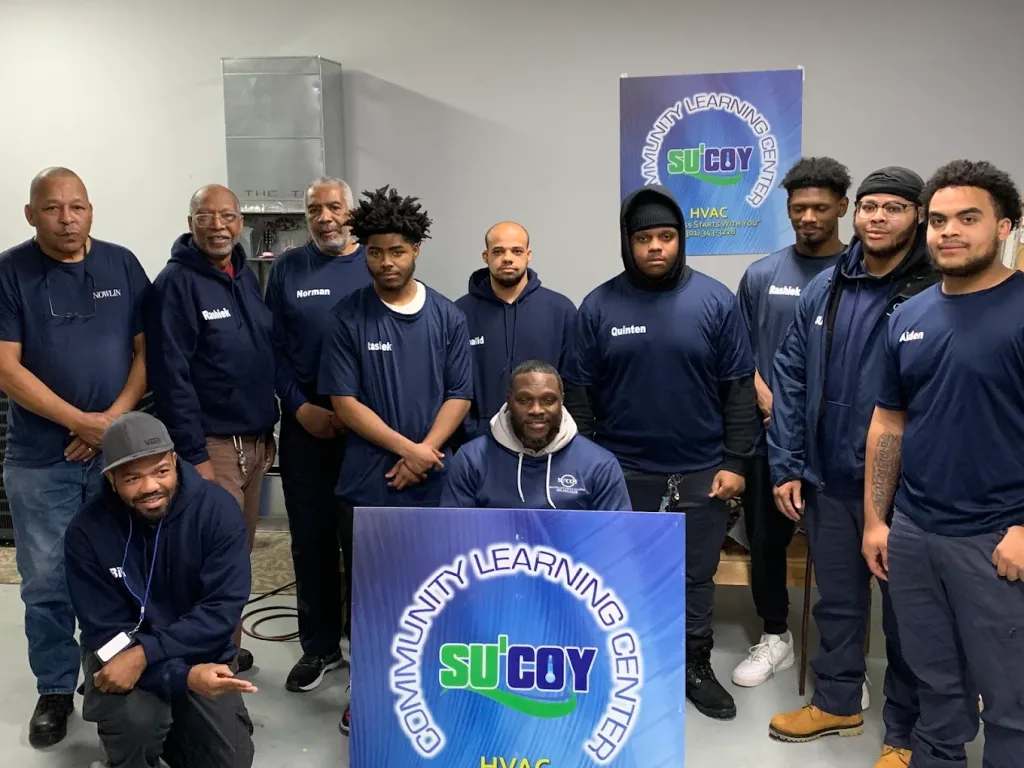
Build a Career the World Actually Depends On
Data centers, hospitals, and smart buildings need technicians who understand both cooling and connectivity. One skill set is no longer enough. This 8-week accelerator brings the two together through live instructor-led training, hands-on labs, technical mentorship, and preparation for six industry credentials.
Why Dynamic Mentoring Tech and Su’Coy CLC Built This Program Together
A Pathway No Standard HVAC Program Offers
Most HVAC training stops at furnaces and air conditioners. This accelerator goes further, pairing HVAC fundamentals with the networking, Linux, and building automation skills that critical facilities actually run on. It’s powered by Su’Coy Community Learning Center’s hands-on training approach and delivered through Dynamic Mentoring Tech’s mentorship model, giving you both technical depth and career guidance.
Stacked
Six certifications,
one program
Guided
Live mentoring
throughout
Connected
Built for data
center hiring
Who the HVAC Engineer Accelerator Is Built For
This program was designed for a wide range of starting points, not just career HVAC technicians. Here’s who tends to thrive in it.
You’re a High School or College Student Weighing Options
If a four-year degree feels like the wrong fit but you still want a technical career with real earning potential, this accelerator gives you industry certifications and job-ready skills in 8 weeks instead of 4 years.
You’re Changing Careers and Want Something Stable
Data centers and critical facilities aren’t going anywhere, and the technicians who run them are in constant demand. If you’re leaving a career that no longer fits, this program gives you a fast, structured path into one that does.
You’re a Working Professional Looking to Move Up
Already in HVAC or IT but stuck without the credentials to move into critical facilities work? Stacking these six certifications is often the exact gap standing between you and a higher-paying role.
You’re an Adult Ready for a New Direction
Whether you’re returning to the workforce or starting fresh, this accelerator doesn’t require a technical background to begin. It’s built to take you from curious to certified in two months.
What Skills You’ll Actually Learn Over 8 Weeks
Data Center Cooling Systems
Learn how CRAC and CRAH units regulate temperature inside a data center, and how hot aisle and cold aisle containment keeps equipment from overheating. This is the cooling knowledge that separates a general HVAC technician from someone ready to work in a server environment.
Building Automation and BAS/BMS
Understand how Building Automation Systems and Building Management Systems control HVAC, lighting, and access across a facility, including BACnet/IP, the communication protocol connecting it all. This is the layer where HVAC and IT genuinely merge.
Networking and TCP/IP Fundamentals
Build the networking foundation behind your Network+ certification, learning how data moves across a facility’s infrastructure. Every sensor, controller, and management system in a modern building depends on a network working correctly.
Linux Administration and Scripting
Get hands-on with the operating system running most data center infrastructure, learning administration basics and scripting fundamentals that let you automate routine tasks instead of doing them manually every time.
Environmental Monitoring and Sensors
Learn how sensors and metering equipment track temperature, humidity, and power conditions in real time, giving facility teams the data they need to catch a problem before it becomes an outage.
UPS, PDU, and Critical Power Systems
Understand the power infrastructure that keeps critical facilities running through an outage, from uninterruptible power supplies to power distribution units, the systems standing between normal operations and a full shutdown.
Preventive Maintenance and DCIM
Learn structured preventive maintenance and troubleshooting practices alongside Data Center Infrastructure Management tools, the systems facility teams use to track equipment health and plan maintenance before failures happen.
Safety, Codes, Compliance, and Capstone Projects
Close out the program with safety standards, code compliance, and a real-world capstone project that puts everything you’ve learned in HVAC and IT together into practice on a project you can describe in any job interview.
Enroll in the Next HVAC Engineer Accelerator Cohort
Spaces Are Limited, Take the First Step Today
This program runs 8 weeks, 5 days a week, from 8:00 AM to 9:00 AM, a structure built to fit around work, school, or family commitments while still moving you toward six certifications. Tuition is $4,500 for the full program.
-
Why This Format Works
One focused hour a day, five days a week, keeps momentum going without demanding a full schedule overhaul. It’s a pace built for people already juggling responsibilities who still want to finish in 8 weeks, not 8 months.
-
How to Reserve Your Seat
Spaces in each cohort are limited to keep the mentoring and lab experience hands-on. Submit your enrollment early to lock in your spot before the next session fills.
Social Media :
Why Stacking These Six Certifications Pays Off
One Program, Six Ways to Prove You’re Ready
A single certification tells an employer you know one thing; spanning networking, servers, Linux, and HVAC, it tells them you can operate across an entire critical facility. That combination is rare at the entry level, which is exactly why it commands stronger job offers and faster advancement. This accelerator is built to get you there in 8 weeks through structured, mentored, hands-on training, not years of piecing together separate courses on your own.
Stand out to employers instantly
Qualify for higher starting pay
Open data center career paths
Build a credential-backed resume
Access lifetime alumni support
What’s Included in the Accelerator
Your 8 weeks include live instructor-led training, one-on-one mentoring and coaching, hands-on labs and real-world capstone projects, and preparation across all six stackable certifications. Every graduate also gains access to career prep, job placement support, and Dynamic Mentoring Tech’s lifetime alumni community.
The Right Time to Enroll
Critical facility hiring tends to accelerate around enterprise budget cycles, and data center expansion shows no sign of slowing. Enrolling now means you’re certified and job-ready before the next hiring wave, not scrambling to catch up once demand peaks.

The Six Certifications You’ll Stack in This Program
CompTIA Network+
Network infrastructure and connectivity form the backbone of every critical facility. This certification proves you understand how systems talk to each other, the first building block of the entire accelerator.
CompTIA Server+
Server hardware, storage, and data center systems keep mission-critical operations running. This credential shows employers you can handle the physical and logical infrastructure behind the racks.
CompTIA Linux+
Linux server administration and operations power most data center environments. This certification builds the command-line fluency critical facilities expect from their technicians.
CompTIA CLNP (Stackable)
Earned by passing Network+ and Linux+ together, this stackable credential signals a combined skill set in Linux network administration that few entry-level technicians can claim.
CompTIA CNIP (Stackable)
Earned by passing Network+ and Server+ together, this stackable credential proves network infrastructure professional-level skill, positioning you for roles beyond basic technician work.
EPA 608 Universal Certification
This certification lets you legally work on any refrigerant-containing equipment, the HVAC foundation underneath every cooling system in every facility this program prepares you to serve.
Temple Hills, Maryland’s Local Critical Infrastructure Training Program
Powered by Su’Coy Community Learning Center, this accelerator draws on the same hands-on training approach that’s prepared HVAC technicians across Temple Hills and Prince George’s County for years, now extended into the data center and critical facilities space growing across the DMV region.
We offer our HVAC Engineer Accelerator to Students From All Across the DMV
20748
20744
20757
20735
Every Season Is Hiring Season in Critical Infrastructure
Unlike seasonal HVAC repair work, demand for data center and critical facility technicians follows business cycles more than weather, though the training calendar still matters for getting ahead of it.

Winter
Budget Cycles Open New Roles
Many enterprises finalize IT and facilities budgets at year-end, opening new headcount in the new year. Graduating with certifications in hand positions you for these early-year hiring pushes.

Spring
Internship and Entry-Level Season
Spring brings a wave of entry-level and internship postings in facilities and data center operations. Completing the accelerator before this season means you’re applying with credentials already in hand.

Summer
Data Center Expansion Continues
Construction and expansion projects for data centers and critical facilities often move forward through summer months, creating demand for technicians ready to support new and existing infrastructure.

Fall
Enterprise Hiring Ramps Back Up
As enterprises return from summer slowdowns, facilities and IT infrastructure hiring often picks back up heading into year-end. Certified graduates are positioned to catch this demand immediately.
Whenever you enroll, the goal stays the same: six certifications and 8 weeks between you and a critical infrastructure career.
Looking for an HVAC and IT Training Program Near Me?
Su’Coy Community Learning Center offers career-focused courses through its Critical Infrastructure HVAC Engineer Accelerator and other skilled-trade programs. Students can develop practical knowledge in HVAC systems, tools, installation, troubleshooting, safety, and related technical skills. Training takes place at the Temple Hills, MD location, providing students with structured instruction and hands-on learning to build a foundation for their future careers.
Notable Local Landmarks in Maryland

HVAC Engineer Accelerator FAQs
The full 8-week Critical Infrastructure HVAC Engineer Accelerator costs $4,500. The program includes live instructor-led training, mentoring, hands-on lab work, and preparation across the six stackable certifications included in the accelerator, giving students a broad technical foundation across HVAC and IT.
The Critical Infrastructure HVAC Engineer Accelerator runs for 8 weeks, with classes held 5 days a week. Students attend daily sessions from 8:00 AM to 9:00 AM, providing a consistent schedule for building technical knowledge, completing coursework, and progressing through the program’s certification-focused training.
No prior HVAC or IT experience is required to begin the program. The accelerator is designed for different starting points, including high school students, career changers, working professionals, and adults exploring a new career direction. Students can build their technical foundation through structured instruction and guided training.
The program prepares graduates for six stackable certifications covering both IT and HVAC. These include CompTIA Network+, Server+, Linux+, CLNP, CNIP, and EPA 608 Universal Certification, giving students credentials across networking, servers, Linux systems, and HVAC refrigerant handling.
Yes. The accelerator includes career preparation and job placement support to help students take their next professional step after training. Graduates also receive access to Dynamic Mentoring Tech’s lifetime alumni community, providing an ongoing connection to resources, professional relationships, and the broader program community.
A standard HVAC program focuses on residential and commercial systems. This accelerator adds the networking, Linux, and building automation skills that data centers and critical facilities specifically require, preparing you for a broader, higher-demand career path.
