Skip to content
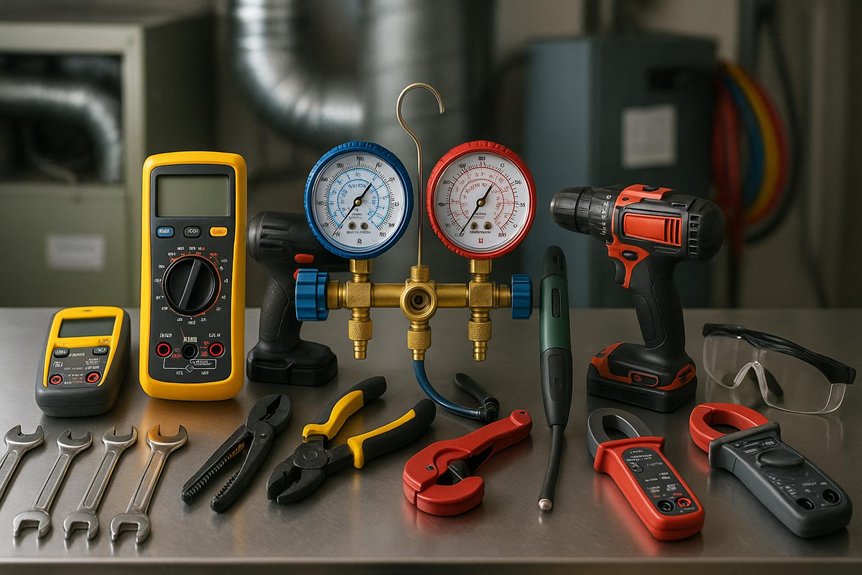
If you’re starting out as an HVAC technician in 2026, having the right tools isn’t optional—it’s vital for safety and efficiency. You’ll need more than just basic hand tools; specialized gear like multimeters, manifold gauge sets, and leak detectors are now industry standards. But what exactly should you pack in your toolkit to handle modern systems and ensure top-notch service? Let’s break down the must-haves that set you up for success.
Multimeter for Diagnosing Electrical Issues in HVAC Systems

A reliable multimeter is one of the most essential tools you’ll use as an HVAC technician. With it, you can quickly check voltage, current, and resistance in various electrical components, ensuring that each part of an HVAC system is operating safely and efficiently. You’ll use your multimeter to diagnose issues like blown fuses, faulty relays, short circuits, or open circuits. This tool helps you confirm if a thermostat is sending the correct signal or if a compressor is receiving power. Always verify power is off before working on live circuits for your safety.
- Measure Voltage – Check if components are receiving proper electrical power
- Test Resistance – Identify faulty wires, sensors, or internal component failures
- Check Continuity – Detect broken circuits or disconnected electrical paths
- Diagnose Components – Troubleshoot relays, capacitors, and thermostats accurately
Choose a multimeter with clear displays, rugged construction, and built-in safety features. Mastering its functions will save you time, reduce guesswork, and help prevent costly mistakes in the field. Many training programs, such as those with a strong emphasis on hands-on experience, ensure that new technicians become proficient in using tools like the multimeter as part of their practical education.
Manifold Gauge Set for Measuring Refrigerant Pressure Accurately
Precision matters when you’re working with HVAC systems, and that’s where the manifold gauge set comes into play. As a new technician, you’ll rely on this tool to measure refrigerant pressure in both high and low sides of the system. By connecting the colored hoses to the corresponding service ports, you can quickly check operating pressures and compare them to manufacturer specifications. This helps you diagnose problems like undercharging, overcharging, or blockages efficiently.
- High & Low Pressure Readings: Monitor system performance on both sides
- Refrigerant Charging Check: Identify undercharge or overcharge conditions
- System Diagnostics: Detect restrictions or airflow-related pressure issues
- Digital vs Analog Options: Choose based on accuracy and ease of use
Modern manifold gauge sets often include both analog and digital options. Digital gauges can offer greater accuracy and easy-to-read displays, making your job smoother. Always make sure you’re using the correct type of refrigerant in the system. Mastering this tool will make you a more effective and confident HVAC technician.
Vacuum Pump for Proper System Evacuation and Moisture Removal
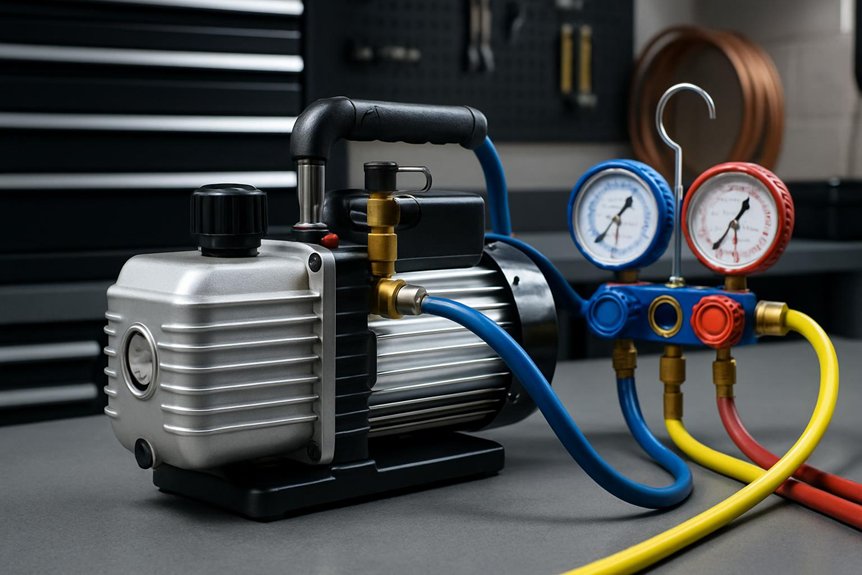
Moisture is the enemy of any HVAC system, and that’s why you’ll need a reliable vacuum pump for every installation or major repair. When you evacuate a system, your goal is to remove air, moisture, and non-condensable gases that can cause corrosion or freeze-ups inside the lines. A good vacuum pump pulls the system down to a deep vacuum, ensuring it’s completely dry before you introduce refrigerant.
| Pump Size | Best For | Why It Matters |
|---|---|---|
| 1.5-3 CFM | Residential systems | Handles small systems efficiently |
| 4-6 CFM | Light commercial | Faster evacuation and moisture removal |
| 7+ CFM | Large systems | Reduces evacuation time significantly |
You’ll want to choose a pump with the correct CFM rating for residential or light commercial work. Always use clean oil for each job to maintain pump performance and protect your equipment. Investing in a high-quality vacuum pump means you’ll prevent future system failures, deliver better results, and build trust with your clients right from the start.
Refrigerant Leak Detector for Identifying System Leaks Quickly
Once you’ve evacuated the system and ensured it’s free of moisture, it’s time to confirm there aren’t any leaks that could compromise performance or safety. That’s where a refrigerant leak detector comes in. This tool lets you quickly and accurately pinpoint leaks in lines, coils, or fittings—no guesswork required. Modern detectors use advanced sensors to “sniff out” even the smallest traces of refrigerant, so you can address problems before they become costly repairs.
- Electronic Sensors: Detect even small refrigerant leaks quickly
- Audible Alerts: Immediate sound indication when leaks are detected
- Visual Indicators: LED signals help confirm leak location
- Fast Troubleshooting: Reduces guesswork and saves service time
To use a leak detector, simply pass the probe along joints and connections. If the detector senses refrigerant, it alerts you with a sound or visual indicator. This immediate feedback saves you time and keeps your work reliable. As a new technician, having a quality leak detector is essential for professional, efficient service.
Digital Thermometer for Measuring Air Temperature and System Performance

A digital thermometer is one of the most reliable tools you’ll use to check air temperature and overall system performance in HVAC work. As a new technician, you’ll depend on accurate temperature readings to assess supply and return air, troubleshoot issues, and confirm that equipment is operating within manufacturer specifications. With a digital thermometer, you can quickly spot temperature differentials, helping you diagnose airflow problems, check thermostat operation, and verify system efficiency.
- Measure Supply Air: Check air coming out of vents
- Measure Return Air: Compare incoming air temperature
- Calculate Temperature Split: Identify cooling or heating efficiency
- Verify System Performance: Ensure system meets manufacturer specs
Choose a digital thermometer that offers fast response times, a wide temperature range, and easy-to-read displays. Many models include probes or clamps to measure air, surface, and duct temperatures. Carrying a dependable digital thermometer ensures you’ll deliver precise results on every job and helps you build trust with customers by providing clear, data-driven performance insights.
HVAC Screwdrivers and Nut Drivers for Daily Service Tasks
Whether you’re tightening electrical panels or removing access covers, screwdrivers and nut drivers are tools you’ll use on almost every HVAC job. These essentials help you handle different fasteners across furnaces, air handlers, and outdoor units with speed and precision.
Key uses and features to look for:
- Multiple Tip Types: Include flathead, Phillips, and square drive to handle various HVAC fasteners
- Magnetic Tips: Prevent screws from dropping in tight or hard-to-reach areas
- Common Nut Driver Sizes: 1/4” and 5/16” are essential for most HVAC equipment
- Insulated Handles: Provide added safety when working near electrical components
- Durable Construction: Withstands daily use across different job site conditions
- Organized Tool Set: Keeps tools accessible, saving time during service calls
Having a reliable and well-organized set ensures you can work efficiently and safely without interruptions on the job.
Cordless Drill for Fast Installation and Equipment Mounting Work

Speed and efficiency define HVAC installs, and a cordless drill quickly becomes your go-to tool for mounting equipment, securing panels, and drilling holes. You’ll save time on every job, whether you’re anchoring air handlers or installing brackets. A quality cordless drill lets you move freely and work in tight spaces without hassle from tangled cords. Look for models with variable speed, a reliable battery, and an ergonomic grip to keep you comfortable during long shifts.
Here’s a quick guide to essential cordless drill features:
| Feature | Why It Matters | What to Look For |
|---|---|---|
| Battery Life | Longer work time | Lithium-ion, 2+ Ah |
| Variable Speed | Precise control | Multiple settings |
| Ergonomic Design | Reduces fatigue | Comfortable handle |
Choosing the right cordless drill can significantly improve your efficiency and comfort on the job. A well-balanced, reliable model helps you complete installations faster, reduces fatigue during long tasks, and ensures consistent performance across different HVAC applications.
Fin Comb for Cleaning and Straightening Condenser Coil Fins
Keeping condenser coil fins clean and straight is crucial for your HVAC system’s efficiency, and that’s where a fin comb comes in. When dirt or debris clogs the fins or accidental bumps bend them, airflow becomes restricted, causing the system to work harder and less efficiently. With a fin comb, you can quickly straighten bent fins and remove trapped debris, restoring proper airflow and performance.
You’ll find fin combs are easy to use—just match the comb’s teeth to your coil’s fin spacing and gently run it through the fins. This simple tool helps you prevent overheating, reduce energy consumption, and extend equipment lifespan. Always keep a fin comb in your kit, because routine coil maintenance is a must for every HVAC technician aiming for top performance.
Tube Cutter and Flaring Tool for Refrigerant Line Work
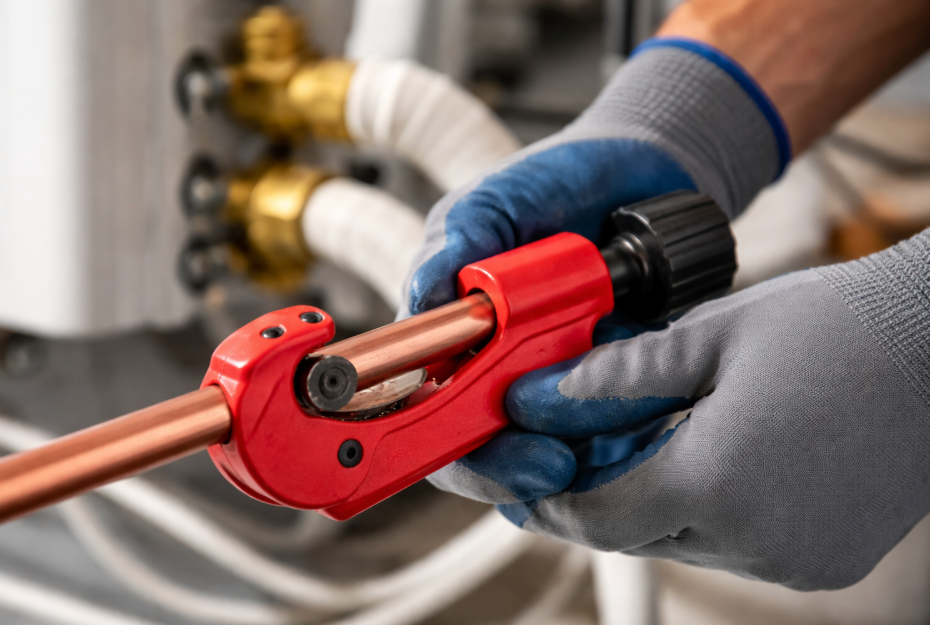
Once your condenser coils are in top shape, it’s time to focus on the refrigerant lines that keep the system running smoothly. For this critical work, you’ll need a reliable tube cutter and flaring tool. The tube cutter lets you make clean, precise cuts in copper or aluminum lines, ensuring tight, leak-free connections. A high-quality flaring tool is essential for expanding the ends of refrigerant lines to create strong, secure joins that can handle system pressure and prevent leaks.
- Clean Pipe Cuts: Ensures smooth edges for proper connections
- Leak-Free Joints: Supports strong and secure refrigerant line fittings
- Precise Flaring: Creates accurate flares for tight seals
- Adaptable Use: Works for copper and aluminum HVAC piping
When you’re installing or servicing HVAC systems, these tools help you adapt piping to fit different configurations and connect lines to valves or fittings. Make sure your flaring tool produces uniform, smooth flares to avoid damage to the lines or potential refrigerant leaks in the future.
Safety Gear Every HVAC Technician Needs on Job Sites
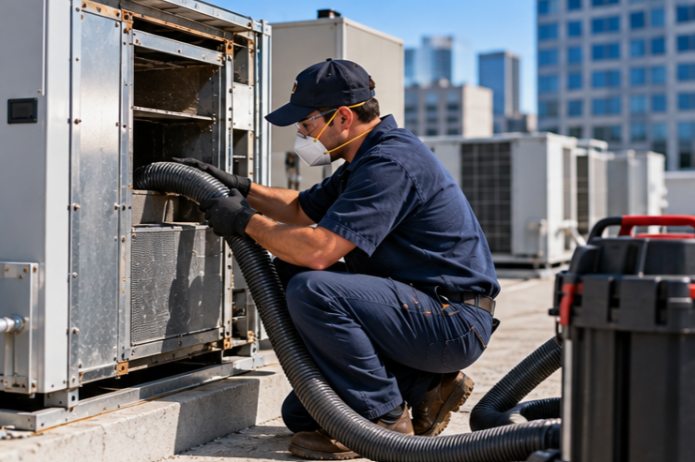
Working as an HVAC technician means dealing with electricity, sharp components, heavy equipment, and sometimes hazardous chemicals. Without proper protection, even routine tasks can become risky. That’s why having the right safety gear is essential to protect yourself and work confidently on every job site.
Essential HVAC Safety Gear
| Safety Gear | Purpose | Why It Matters on Job Sites |
|---|---|---|
| Safety Glasses | Protect eyes from debris and chemicals | Prevents eye injuries during cutting, cleaning, or repairs |
| Protective Gloves | Shield hands from cuts, burns, and refrigerants | Reduces risk of injury when handling sharp or hot components |
| Steel-Toe Boots | Protect feet from heavy objects and slips | Essential for safety in active or cluttered work environments |
| Hearing Protection | Reduce noise exposure | Prevents long-term hearing damage in loud mechanical areas |
| Hard Hat | Protect head from overhead hazards | Important on construction or installation sites |
| Respirator / Dust Mask | Filter dust, fumes, and airborne particles | Protects lungs during duct cleaning or chemical exposure |
Using the right safety gear not only reduces the risk of injury but also helps you work with confidence and consistency on every job site. When combined with the right tools and proper training, it allows you to deliver reliable, professional results while staying protected in real-world HVAC environments.
As you build your skills, understanding how to use these tools safely and effectively becomes just as important as owning them. This is where structured training plays a key role in preparing you for real job site challenges.
How Su’Coy CLC Trains Students to Use HVAC Tools

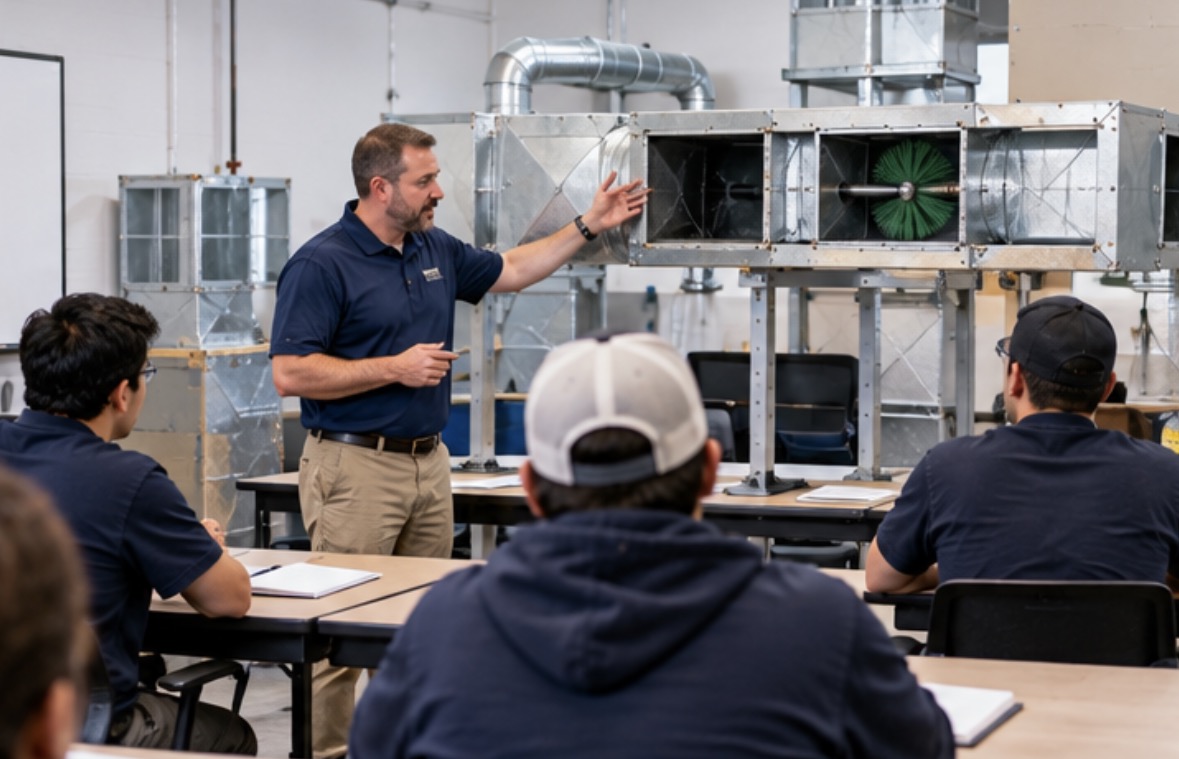
Mastering HVAC tools requires more than theory; it takes real, hands-on experience in practical settings. At Su’Coy CLC, training is designed to prepare you for real job site conditions from day one. You’ll work directly with essential tools like multimeters, manifold gauges, vacuum pumps, and leak detectors, building confidence through guided, real-world application rather than just classroom learning.
Instructors focus on proper tool usage, safety practices, and accurate diagnostics, helping you develop the skills needed to troubleshoot systems, measure refrigerant pressures, and handle installation tasks with precision. If you’re serious about starting your HVAC career, explore the Su’Coy CLC HVAC Universal Technician Program to gain hands-on training and industry-ready experience needed to succeed.