Skip to content

Master HVAC Skills with Winter-Focused Training in Temple Hills
Winter is the perfect time to get hands-on with HVAC training in Temple Hills, MD. Working on furnaces and boilers while they’re running gives students real-world experience, sharpening troubleshooting skills faster than classroom theory alone. This guide breaks down how enrolling in a winter session, like the 8-week HVAC Universal Technician Program, helps you gain practical HVAC skills, strengthen furnace diagnostics, and fast-track your path to local HVAC jobs.
We’ll also cover everything Temple Hills students need to know: enrollment steps, evening class options, and flexible payment plans that make winter training both convenient and career-ready.
Why Winter HVAC Training Fast‑Tracks Your Heating Certification
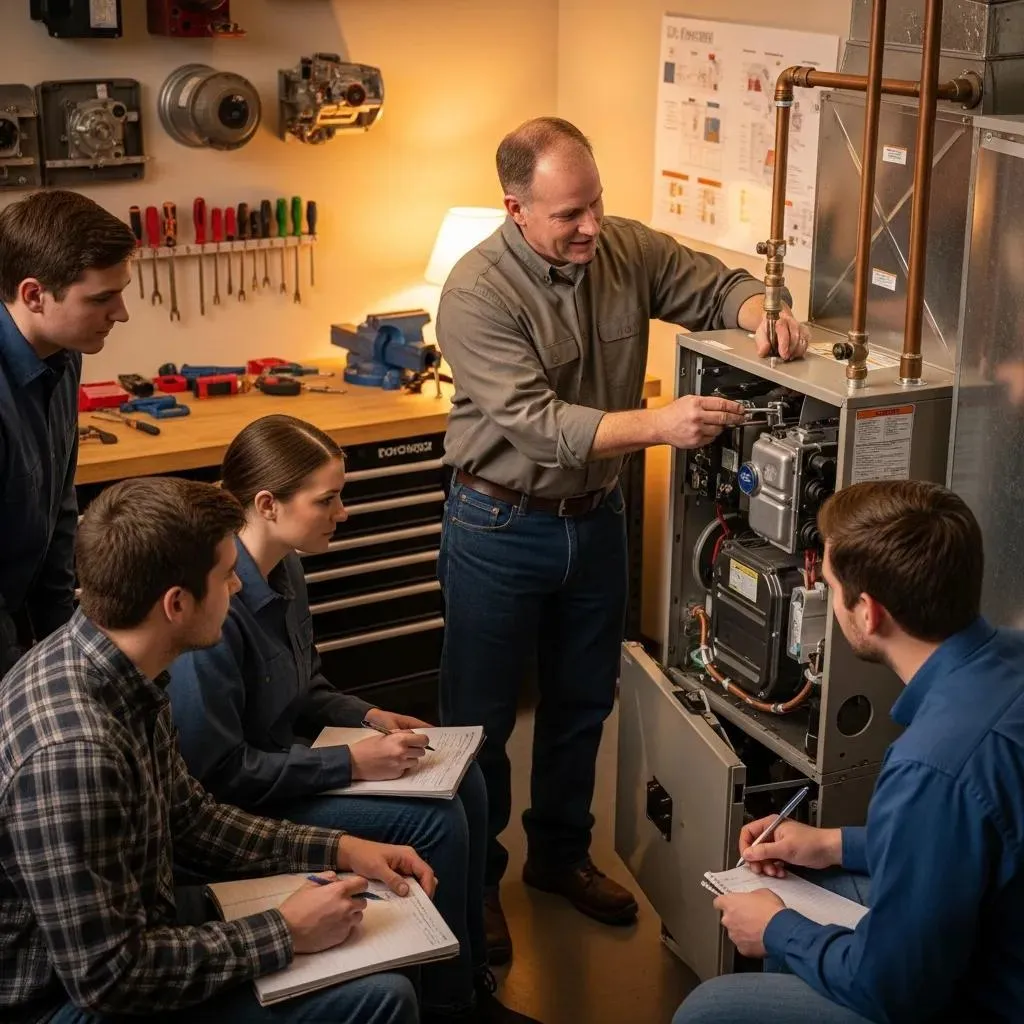
Winter training focuses on systems that are actually working, so you see combustion, airflow, and thermostat behavior in real time. That immediate feedback helps trainees learn cause-and-effect in ways classroom-only programs can’t. Winter sessions also tend to run with smaller groups and more focused coaching, which shortens the learning curve. Finishing in winter or early spring positions graduates to apply for seasonal hiring windows in Temple Hills.
Winter training delivers three clear benefits:
- Smaller cohorts and more one‑on‑one instruction to speed learning.
- Live heating system practice that builds authentic troubleshooting and safety skills.
- Timing that helps graduates enter the job market ahead of peak demand.
Together, these advantages reduce time‑to‑competency and boost readiness for certification and field work.
How Winter Enrollment Creates Smaller Classes and More Personalized Instruction
Smaller winter cohorts lower the student‑to‑instructor ratio, so instructors can give direct feedback during labs. With fewer students, instructors watch each trainee’s technique on tasks like brazing, electrical diagnostics, and refrigerant recovery, catching errors early and reinforcing safe practices. That focused coaching improves retention and helps students master complex procedures needed for HVAC universal technician program assessments. Instructors can also tailor lab sequences to address individual gaps, which raises pass rates and confidence.
Why Winter Is the Best Time for Real‑World Heating System Practice
When systems run in winter, they reveal faults that are invisible when idle, improper combustion, restricted airflow, or short cycling. Working on live furnaces gives trainees hands‑on experience with startup and shutdown sequences, flame inspection, venting checks, CO risk assessment, and combustion safety tests. These repeated field‑like experiences build troubleshooting patterns technicians use on the job and line up directly with certification competencies and employer expectations. The result: graduates who diagnose common winter failures faster and more accurately.
Start your winter HVAC training in Temple Hills and gain real-world experience. Contact us to learn more!
How Su'Coy Community Learning Center’s Winter HVAC Program Prepares You for EPA Section 608

Su’Coy’s hands-on labs are designed to match EPA Section 608 objectives, including refrigerant handling, recovery, leak detection, and proper disposal in a controlled, equipment-rich setting. In the 8-week HVAC Universal Technician program, students practice refrigerant recovery, manifold and pressure diagnostics, and leak isolation until procedures become second nature. This focused, practical training ensures students develop the skills and confidence needed for real-world HVAC work and certification readiness.
How students prepare for EPA 608 certification:
- Practice refrigerant recovery and leak detection in lab exercises.
- Attend focused test-prep sessions that mirror EPA exam topics and formats.
- Build confidence through repeated hands-on application with training equipment.
Core Program Modules:
| Module | Skill Taught | Expected Outcome |
|---|---|---|
| Refrigerant Handling & Recovery | Safe recovery procedures, charge calculations, and leak detection | Preparedness for EPA Section 608 and field refrigerant work |
| Furnace Troubleshooting | Combustion analysis, airflow diagnostics, venting checks | Ability to diagnose common heating failures at startup |
| Electrical & Controls | Circuit testing, relay, and thermostat troubleshooting | Competence in safe electrical diagnostics and basic repairs |
Su’Coy’s program gives students ample hands-on experience with equipment and systems commonly used in residential and light-commercial HVAC work. By completing these labs and focused training, students gain the practical knowledge and skills required to succeed in certification exams and local HVAC job markets.
What Skills You’ll Build in the 8‑Week Universal Technician Program
Our 8‑week program balances installation, diagnostics, brazing, basic electrical work, and refrigerant handling so graduates leave with a practical, job‑ready skill set. You’ll practice safe brazing on copper line‑sets, perform system start‑ups, and work through multi‑component troubleshooting that combines mechanical and electrical thinking. Repeated lab cycles on residential and light‑commercial units reinforce diagnostic logic and safety procedures so you can handle common service tasks from day one. These hands‑on skills support EPA 608 competencies and make graduates attractive to local employers.
Contact us to learn more about hands-on training opportunities!
How In‑House EPA Section 608 Testing Improves Career Readiness
Offering the EPA 608 exam on-site removes logistical hurdles between learning and certification. Integrated prep sessions and instructor reviews target weak areas before testing, increasing the chance of passing on the first try and shortening time‑to‑hire. Instructors can review results immediately and assign focused lab work to fill gaps, accelerating competency development. The overall effect is a smoother transition from classroom to certified field technician roles in the local job market.
Career Benefits of Completing Winter HVAC Training in Temple Hills

Completing winter training accelerates entry into a steady, in-demand trade, increases earning potential, and connects graduates to local employer networks in Temple Hills. Maryland’s market shows ongoing demand for HVAC technicians and competitive pay for certified workers. Job placement support, combined with strategic timing of winter graduation, helps students transition from training to interviews and early-career roles. Local programs also prepare technicians to handle region‑specific systems and weather‑related failure modes.
Common local HVAC roles and how training supports them:
- Residential HVAC Technician: Service, repair, and maintain home heating systems.
- Commercial Service Technician: Maintain and troubleshoot larger systems in small commercial sites.
- Installation Technician: Handle new system installation and start‑ups.
Role comparison: The table below maps typical job roles to required training and common employer pathways so outcomes are clear for prospective students.
| Role | Training / Credential | Typical Employers / Pathways |
|---|---|---|
| Residential Technician | EPA Section 608; hands‑on heating practice | Local service contractors, residential maintenance teams |
| Commercial Technician | Controls training is often preferred | Building service companies, small commercial contractors |
| Installer / Start‑up Tech | Installation and start‑up modules | HVAC contractors, new construction teams |
How Job Placement Support Boosts Employment in Temple Hills
Placement services connect training to employment through resume help, mock interviews, and employer introductions tailored to local hiring cycles. Programs that keep employer pipelines active can schedule interviews to match hiring windows and advise on the certifications local contractors want. When programs coordinate closely with area employers, graduates often move from graduation to interviews within weeks. Those supports shorten job searches and improve the match between graduate skills and regional needs.
Career Growth Opportunities for HVAC Technicians
Completing a hands-on HVAC training program opens the door to a variety of career paths. Technicians can progress from entry-level roles to more advanced positions, taking on greater responsibilities, specialized certifications, or supervisory tasks. Practical training combined with EPA Section 608 preparation helps graduates build skills that employers value, setting the foundation for long-term career growth and success in the HVAC industry.
How to Enroll in Winter HVAC Training with Flexible Payment and Scheduling

Enrolling in winter HVAC training at Su’Coy Community Learning Center is simple and designed for working students. The 8-week HVAC Universal Technician Program offers hands-on labs and evening classes to fit around your schedule. Flexible payment plans help secure your spot without financial stress, making it easier to start your HVAC career this winter.
Steps to Enroll:
- Complete the online application with basic eligibility information.
- Schedule an admissions interview to discuss available evening class options.
- Select a payment plan or financial option and confirm your enrollment.
If you have questions about class schedules, program details, or payment plans, the admissions team is available to guide you one-on-one and help you get started on your HVAC training in Temple Hills, MD.
Learn more about our payment plans and enrollment process. Visit our website now!
Financial Options for Winter HVAC Training in Temple Hills
Su’Coy Community Learning Center makes it easier to start your 8-week HVAC program with flexible payment plans. Students can split tuition into manageable installments, securing their spot without paying the full amount upfront. The admissions team guides applicants through available payment options and ensures enrollment is smooth, so you can focus on hands-on training and building your HVAC career.
How Evening Classes Work for Working Professionals During Winter Enrollment
Evening classes concentrate theory and lab work into blocks that fit around standard work hours, letting employed students gain hands‑on HVAC skills without sacrificing income. Instructors sequence evening labs to build skills step‑by‑step so students complete core modules like furnace troubleshooting and refrigerant handling in a logical order. We also share time‑management tips, employer communication strategies, and study routines to help students balance work and training. For many students, evening HVAC classes in Temple Hills are the practical path to certification while staying employed.
Launch Your HVAC Career with Su’Coy Community Learning Center This Winter

Winter is the ideal time to develop practical HVAC skills at Su’Coy Community Learning Center in Temple Hills, MD. Their 8-week Universal Technician Program emphasizes hands-on training, real-world troubleshooting, and focused instructor guidance, helping students build confidence and technical expertise.
Small class sizes, structured lab exercises, and evening sessions make it easier for students to learn safely and effectively while managing other commitments. Graduates leave with practical experience in residential and light-commercial HVAC systems, a deeper understanding of equipment, and a strong foundation for pursuing further training or career opportunities in the HVAC field.
Apply now and secure your spot in Su’Coy Community Learning Center Winter HVAC Program!