
If you are working full time and dreaming of a career in HVAC, one worry probably stops you before you start. Can you really complete an eight-week evening HVAC program without quitting your job? It is a fair question, because you have bills to pay and cannot simply disappear from work for two months to attend school every day.
The good news is that evening HVAC programs are designed around this exact situation. Instead of requiring a full-time daytime commitment, an evening program allows working adults to keep their current jobs while developing the technical knowledge and hands-on skills needed to enter the HVAC field.
This guide answers the question directly and honestly. It explains how an eight-week evening schedule can fit around a full-time job, what a realistic week may look like, what you will learn, and what happens after training. By the end, you will have a better idea of whether this type of program fits your schedule and career goals.
Yes, the Program Is Built for Working Adults
The short answer is yes. Evening HVAC programs are specifically structured for people who cannot leave their jobs during the day. Instead of choosing between your current income and a new career path, you can continue working during normal business hours and attend training in the evening.
Eight weeks is also short enough to create a clear finish line while still giving you time to develop foundational HVAC knowledge and practical skills. Rather than committing to a program that stretches across many months or years, you know from the beginning that the intensive schedule has a defined endpoint.
Why the Evening Format Matters
For someone already working 40 or more hours a week, scheduling is often the biggest obstacle to career training. Evening classes remove much of that conflict because your daytime employment can remain largely unchanged.
The commitment is still real. You will need to attend class consistently, review what you learn, and make room for training alongside your normal responsibilities. But because the program is limited to eight weeks, you can plan around a temporary period of increased activity rather than trying to maintain an intensive schedule indefinitely.
What the Eight-Week Evening Schedule Actually Looks Like
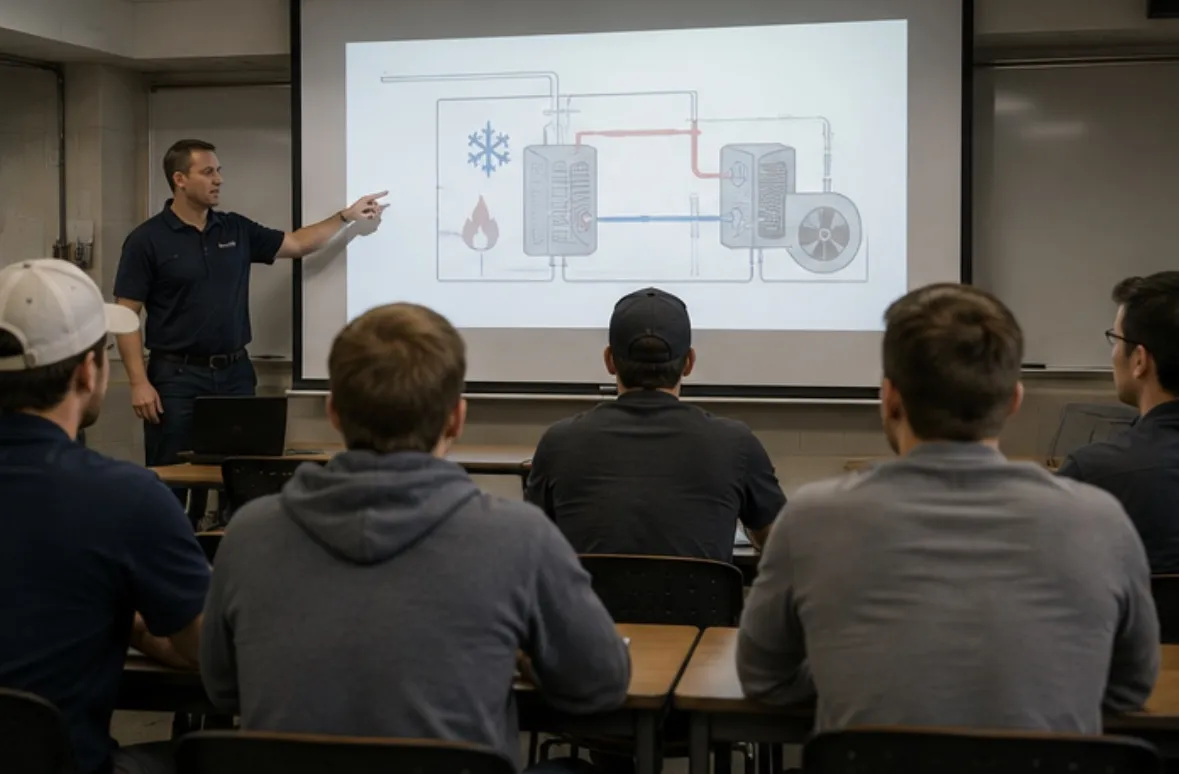
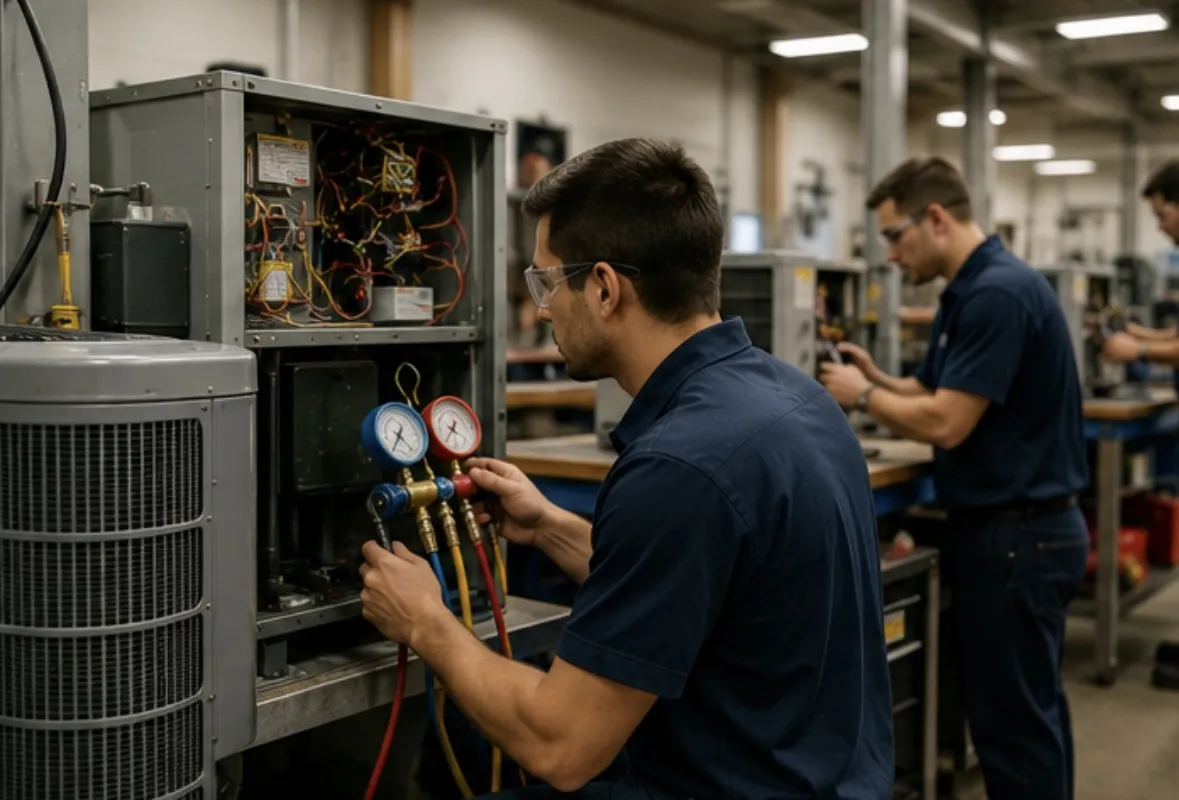
Understanding the rhythm helps you plan realistically. Evening classes typically meet a few nights each week, combining classroom instruction with hands-on lab time. You learn the theory, then practice the skills on real equipment, which is how technical training actually sticks. The table below shows the general shape of the eight weeks so you can picture it around your work life.
| Phase of the program | What you focus on |
|---|---|
| Early weeks | Refrigeration cycles, electrical controls, and ventilation fundamentals in the classroom. |
| Middle weeks | Hands-on labs with professional tools like digital manifolds and combustion analyzers. |
| Final weeks | Diagnostics, repairs, and preparation for the EPA 608 and licensing exams. |
Because the sessions are in the evening, your workday stays largely intact. You go to work, attend class in the evening, and practice what you learn. The commitment is real, but it is time-boxed to eight weeks, which makes it far easier to plan for than an open-ended program that drags on with no clear finish line.
How to Balance Full-Time Work With Evening Classes
Balancing full-time work with evening classes is manageable when you treat training as a fixed part of your weekly schedule. Plan your class nights in advance, prepare for busy days, and set aside short periods for reviewing lessons. Because the program lasts only eight weeks, you have a clear and achievable finish line.
Plan Your Weeks in Advance
Balancing work and school is very doable with a little planning. Map your class nights on a calendar and protect that time the way you would protect a work shift. Prepare meals ahead, arrange any childcare early, and let your household know your schedule for the eight weeks. Treating the program as a fixed commitment keeps you consistent and on track.
Study in Small, Steady Blocks
You do not need marathon study sessions to succeed. Short, regular review, even twenty to thirty minutes on non-class days, helps the material stick far better than cramming. Read your notes on breaks at work or in the evening, and focus on understanding the systems rather than memorizing them. Steady effort over eight weeks adds up to real, lasting knowledge.
Talk to Your Employer
Many working adults find their current employer supportive of career training, especially when it does not disrupt the workday. Since classes are in the evening, you rarely need time off. Still, letting a manager know you are investing in a skilled trade can build goodwill, and some employers even encourage it. A short, honest conversation is usually worth having.
Build a Realistic Weekly Routine
Your schedule does not have to be complicated. The key is knowing in advance when you will work, attend class, study, and handle your normal responsibilities.
- Work: Keep your normal daytime schedule as much as possible.
- Class: Treat evening training as a fixed commitment.
- Study: Use short review periods rather than waiting until the last minute.
- Rest: Protect enough downtime to avoid burning yourself out.
- Home responsibilities: Communicate the temporary schedule with your household.
The eight-week timeframe helps because you know exactly how long the heavier schedule will last. Instead of wondering whether you can maintain it indefinitely, you are working toward a specific finish line.
What You Will Learn in Eight Weeks
An effective HVAC program should give you more than classroom theory. Over eight weeks, you build a foundation in refrigeration, electrical controls, and ventilation before applying those concepts through hands-on work with professional HVAC tools. That combination helps you understand how systems operate and how technicians approach real-world diagnosis and repair.
Core Skills You Build
- Refrigeration: Understand how the refrigeration cycle moves heat and affects system performance.
- Electrical controls: Learn how electrical components and controls work together.
- Ventilation: Build an understanding of airflow and ventilation fundamentals.
- Diagnostics: Learn how technicians identify problems instead of guessing at failed components.
- Hands-on skills: Practice using professional tools and applying classroom concepts to HVAC equipment.
The training also prepares you for important industry credentials. The curriculum includes preparation for EPA Section 608 certification, which is required for technicians who handle regulated refrigerants, along with preparation for Maryland licensing and NATE certification. Building technical knowledge and working toward recognized credentials at the same time gives you a stronger foundation for entering the trade.
What Happens After You Finish the Program
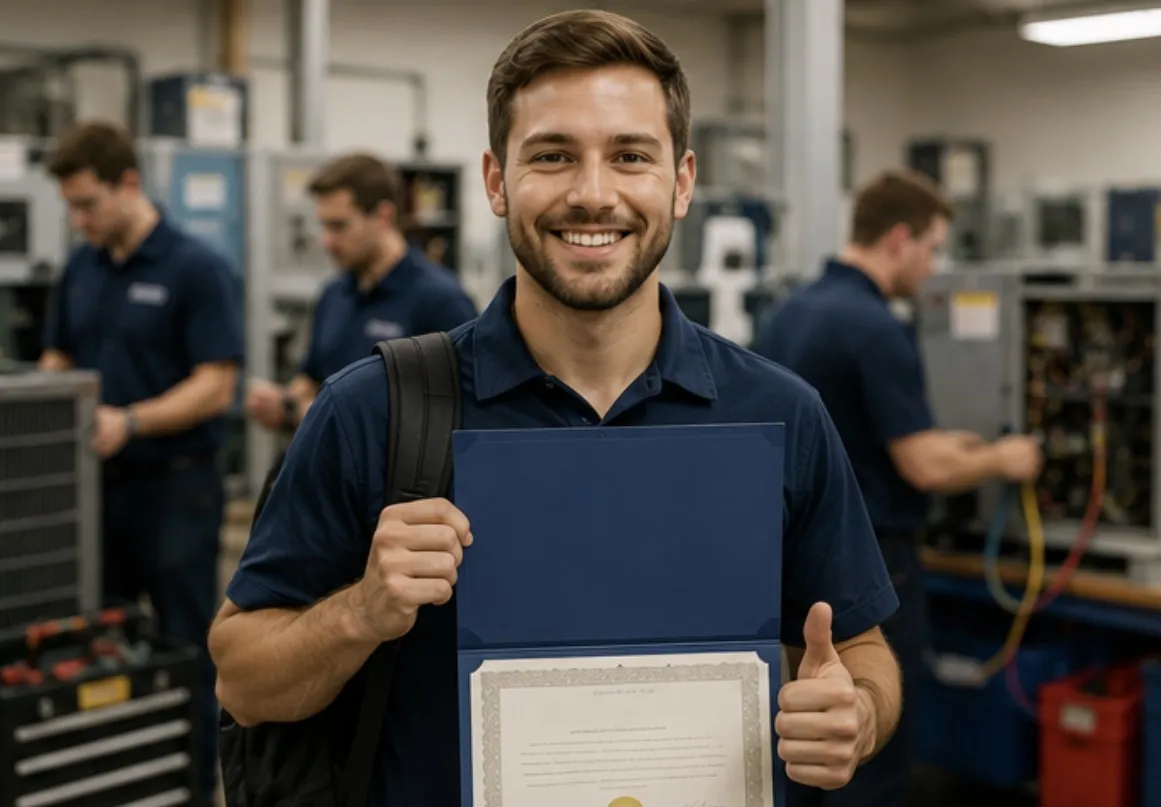
Completing the program is the beginning, not the end. With your EPA Section 608 certification and hands-on training, you are ready to pursue entry-level HVAC roles such as installer, apprentice, or service technician. The field is in steady demand, and the U.S. Bureau of Labor Statistics reports median pay for HVAC technicians of roughly $57,000 per year.
The transition also happens quickly compared with most education paths. Because the program runs only eight weeks, you can move from full-time worker to certified HVAC candidate in about two months rather than years. If you want a fuller picture of the steps, Su’Coy CLC’s guide on how to become an HVAC technician walks through the certifications in detail.
Is Eight Weeks Really Enough?
It is fair to ask whether eight weeks can truly prepare you for a trade. The honest answer is that it prepares you for an entry-level role and certification, not for mastering every advanced system overnight. HVAC is a career you keep growing in. What the program gives you is the strong, certified foundation employers look for when hiring new technicians.
From there, you build expertise on the job, often earning more as your skills grow. That is true of every HVAC technician, regardless of where they trained. The point of an eight-week evening program is to get you qualified, certified, and working, so your real-world experience can begin as soon as possible rather than years from now.
Why Choose Su’Coy CLC for Your HVAC Training
Changing careers while working full time takes commitment, and the right school makes it achievable. Su’Coy Community Learning Center in Temple Hills, Maryland, built its eight-week evening Universal Technician program specifically for working adults who cannot pause their income to attend daytime classes. The schedule is designed around your real life, not the other way around.
Students learn through hands-on labs with professional tools and prepare for the EPA 608 certification, Maryland licensing, and NATE certification that employers value. That combination of practical skill and recognized credentials is what turns eight weeks of evenings into a genuine, hireable career foundation in a field with steady demand across Maryland and the D.C. area.
If you are ready to build a new future without leaving your current job, the Su’Coy CLC Universal Technician program is designed to get you there. You keep working, you train in the evenings, and in about eight weeks you step toward a skilled, in-demand HVAC career. Reach out to Su’Coy CLC to start your enrollment today.