Skip to content
If you are looking at duct cleaning training as a way into the trade, the first thing worth sorting out is what the training actually gives you. You do not want to spend money expecting a state license, but you also do not want to dismiss a credential that can put you on a job site and earning while you build toward one.
There is no single answer, because it depends on the kind of work you intend to do and how far you want to take it. This guide walks through what residential duct cleaning training covers, how Maryland HVACR licensing actually works, and exactly where the two meet.
What Does Residential Duct Cleaning Training Actually Cover?
A focused duct cleaning program is not a general HVAC course. It teaches you one service properly rather than giving you a broad overview of heating and cooling, which is why it can be completed in days instead of years.
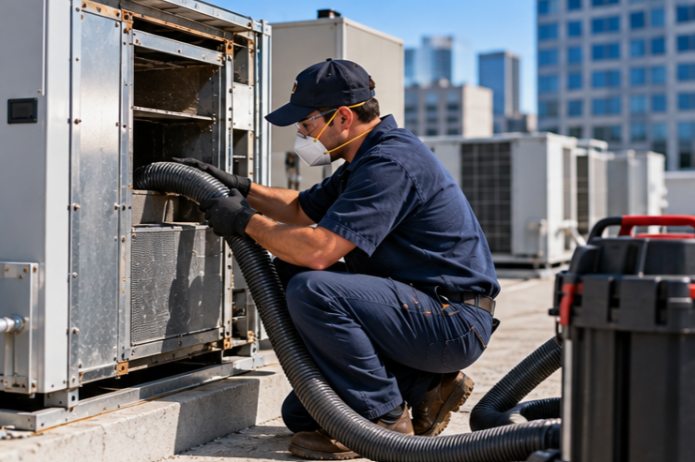
The training centers on the equipment and the standard the industry works to. In a hands-on program built around the NADCA ACR Standard, you should expect to come away able to handle:
- Negative air machine setup and operation on a live residential system
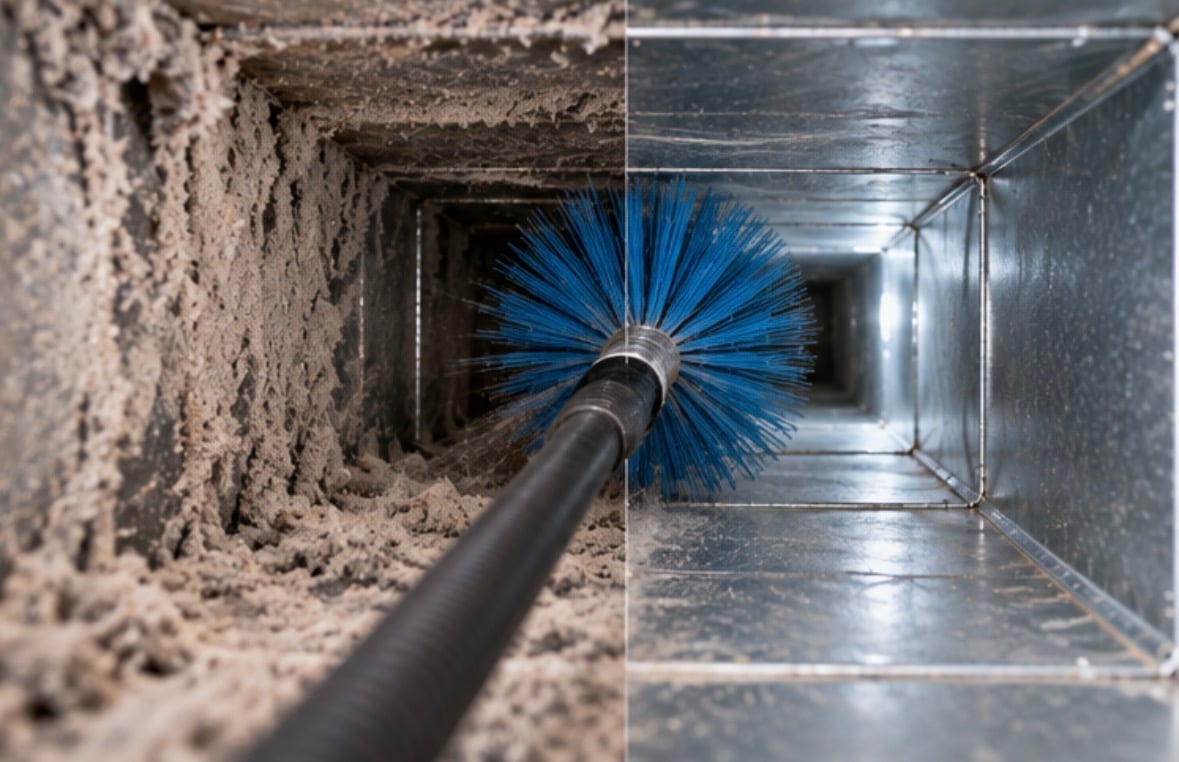
- Rotary brush and compressed air agitation of supply and return ducts
- Duct sealing and basic repair where the system needs it
- Mold recognition protocols and knowing when a job stops being yours
- Client walkthroughs before and after the work
- Job costing, pricing and protecting your profit margin
That last pair matters more than newcomers expect. Plenty of people learn to clean a duct system properly and still struggle because they priced the job wrong, and a program that skips the business side leaves you half equipped.
Does Maryland Require a License to Clean Air Ducts?
This is the question that sends most people looking for a clear answer, and it deserves a careful one. Maryland regulates heating, ventilation, air conditioning and refrigeration work through the state HVACR Board, and that licensing structure governs HVACR services.
Duct cleaning as a standalone service sits differently from installing or repairing HVAC equipment, which is why training programs can accept students with no prior license. Once your work extends into sealing, repair or anything touching the mechanical system, you are moving toward territory the Board governs.
The practical advice is to confirm the scope of what you intend to offer directly with the Maryland HVACR Board before you advertise services. That one phone call is worth making early, because it shapes how you structure the business.
How Does Maryland HVACR Licensing Work?
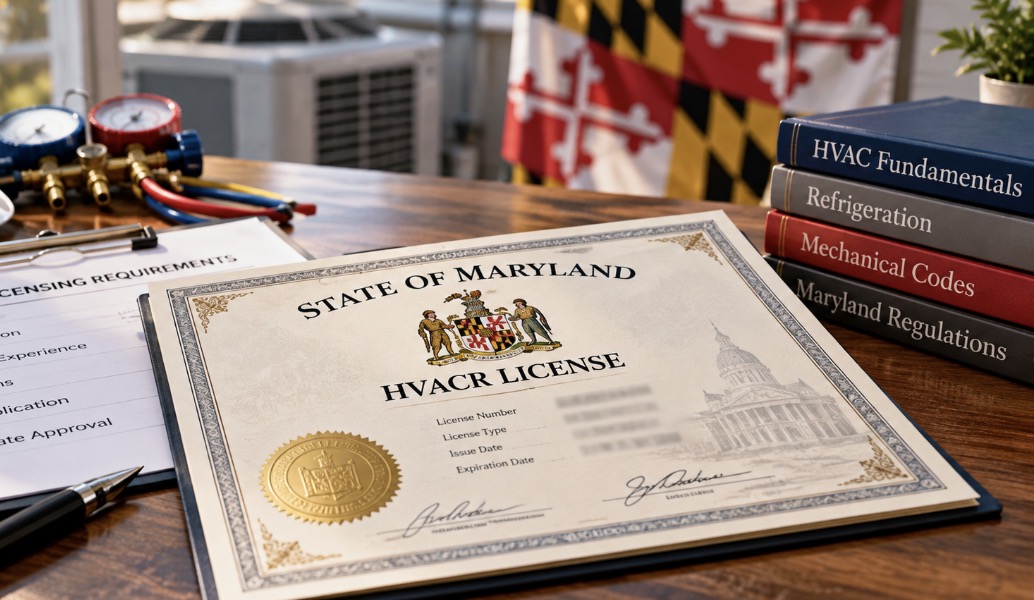
If your longer goal is becoming a licensed HVAC technician rather than running a cleaning service, it helps to see the whole ladder at once. Maryland issues six license types, and each one has defined requirements.
Maryland HVACR License Types and What They Require
| License Type | What It Requires |
|---|---|
| Apprentice | No prerequisites. Work under the direction of a licensed contractor |
| Journeyman | Three years as an apprentice, 1,875 hours of training, exam score of 70 |
| Journeyman Restricted | Same route, limited to no more than four HVACR service areas |
| Limited Contractor | Entitles the holder to maintain and repair HVACR systems only |
| Master Restricted | Installation and maintenance in one or more areas of HVACR work |
| Master | Three years as a journeyman, 1,875 hours in the prior year, exam score of 70 |
The important line in that table is the first one. Anyone entering the HVACR trade in Maryland obtains an apprentice license with no prerequisites, then builds hours under a licensed contractor from there.
Where Does Duct Cleaning Training Fit in That Path?
Think of the two as parallel rather than competing. The state licensing ladder is about hours and supervised experience over years, while a duct cleaning certificate is about being genuinely useful on a job site in a matter of days.
For someone starting out, that combination is practical. You can complete training, begin doing paid duct cleaning work, and accumulate the field time and income that make an apprenticeship easier to sustain. Many people find the trade far more manageable when they are earning inside it rather than waiting to enter it.
For a technician who already holds a license, the calculation is different. Duct cleaning becomes an added service line you can sell to existing customers, often with better margins than the repair work you are already doing. A combined commercial and residential program covers both sides in one course rather than splitting them.
What Skills Will You Actually Leave With?
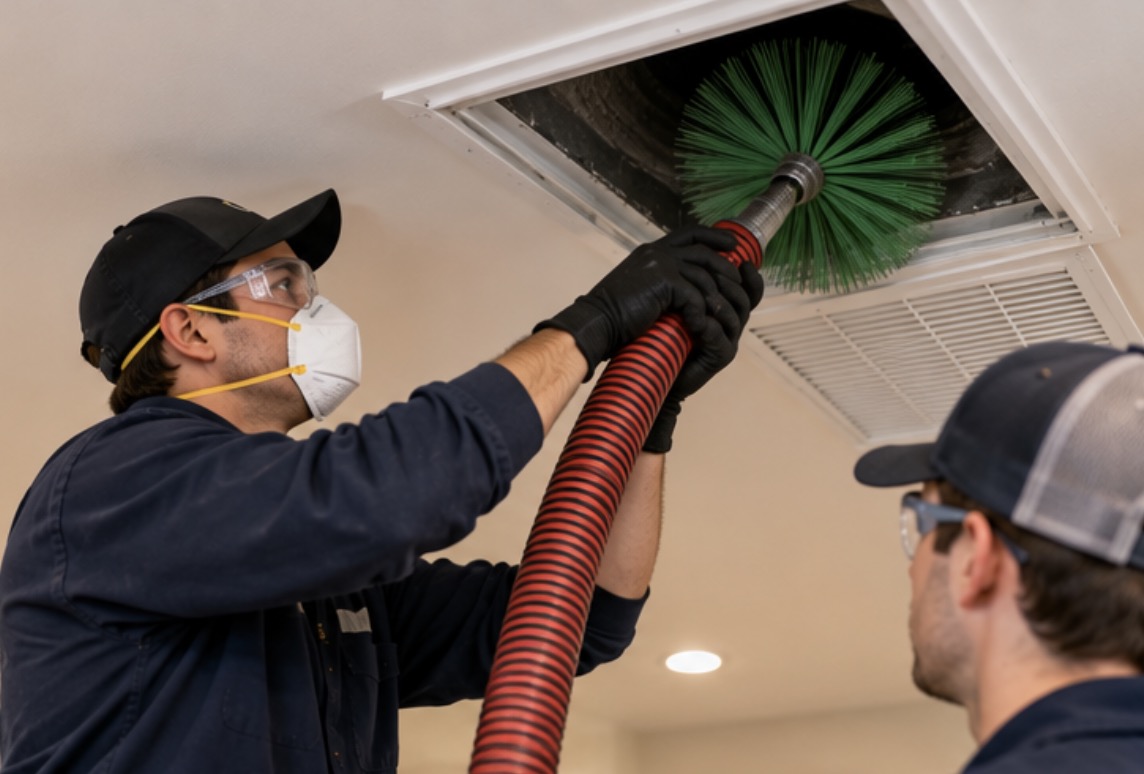
Six days of hands-on work produces a specific set of capabilities rather than general familiarity. These are the four that determine whether you can walk onto a residential job and complete it properly without supervision.
Running a Negative Air Machine Correctly
Putting a system under negative pressure is the difference between removing debris and redistributing it through a customer’s home. You learn where to cut access, how to set the machine, and how to confirm the system is actually under suction before any brushing starts.
Working to the NADCA ACR Standard
The ACR Standard is the industry reference for how air systems should be cleaned and verified. Training to it means your work is measured against something recognized rather than against whatever the last person taught you.
Recognizing Mold and Knowing When to Stop
Mold recognition protocols matter as much for what they tell you not to do. Knowing when a finding moves beyond cleaning and into remediation protects both the customer and you, and it is a line newcomers frequently cross without realizing.
Pricing a Job and Protecting Your Margin
Job costing, quoting and building a recurring client base are taught alongside the technical work. A properly cleaned system that lost money is still a failed job, and this is the part most technical training leaves out entirely.
Together those four are what separate someone who has watched duct cleaning from someone who can be trusted with a customer’s home unaccompanied.
Is the NADCA ASCS Certification Worth Pursuing Too?
For many people, yes, and it is worth understanding how it differs from a training certificate. The Air Systems Cleaning Specialist credential is issued by NADCA and earned by passing their examination, which covers indoor air quality, safety, mechanical knowledge and practical application.
NADCA recommends two to four years of field experience before attempting the exam, though it sets no formal eligibility prerequisites. Once earned, the credential requires six continuing education credits each year, with renewal due by June 30.
That sequencing is worth noting. Training first, field experience next, then the ASCS exam once you have real jobs behind you is a more realistic order than attempting the certification cold.
Who Is This Training Actually For?
Duct cleaning training suits a wider range of people than most trade programs, largely because it does not require a license to begin. It tends to be a strong fit if you are:
- Entering the trades with no prior HVAC background or license
- An HVAC technician wanting to add a service line to existing work
- Running a cleaning or restoration business looking to expand
- Leaving another field and wanting a skill you can use quickly
- Building toward a Maryland apprentice license and wanting income first
It is a weaker fit if what you actually want is broad HVAC installation and repair knowledge. That is a different and considerably longer path, and duct cleaning training is not a substitute for it.
What Should You Expect From a Six-Day Program?
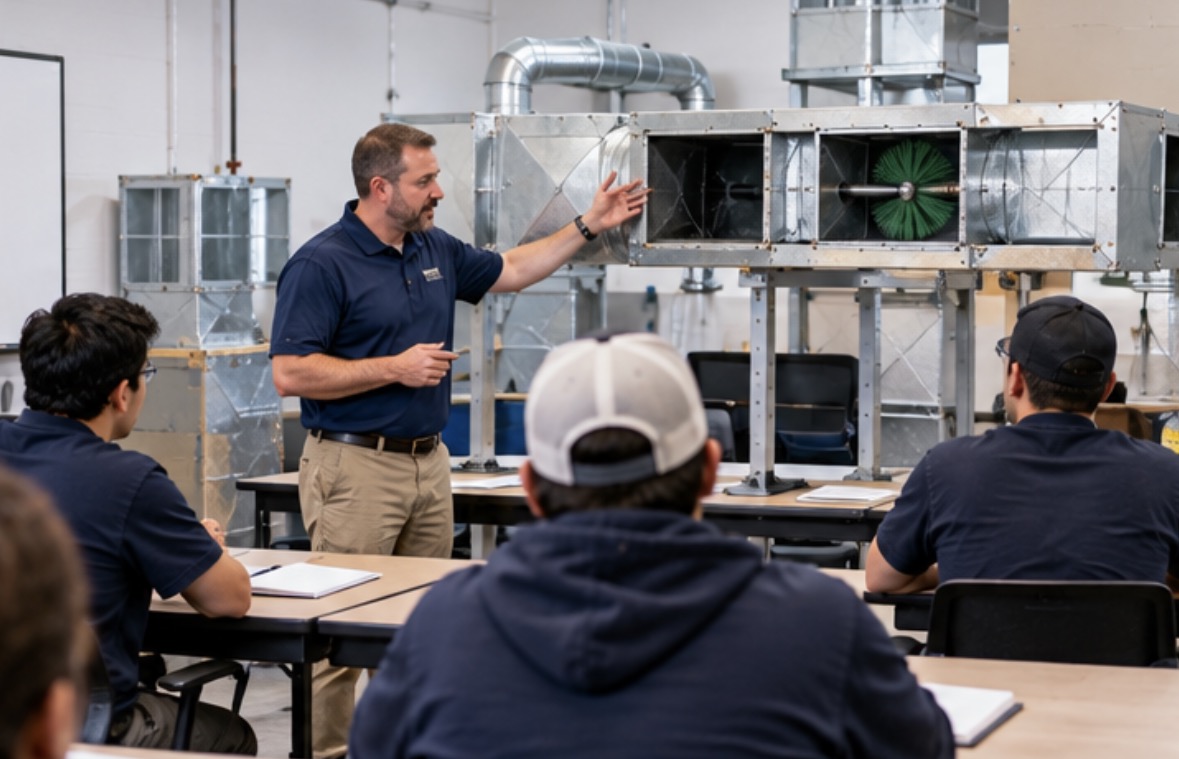
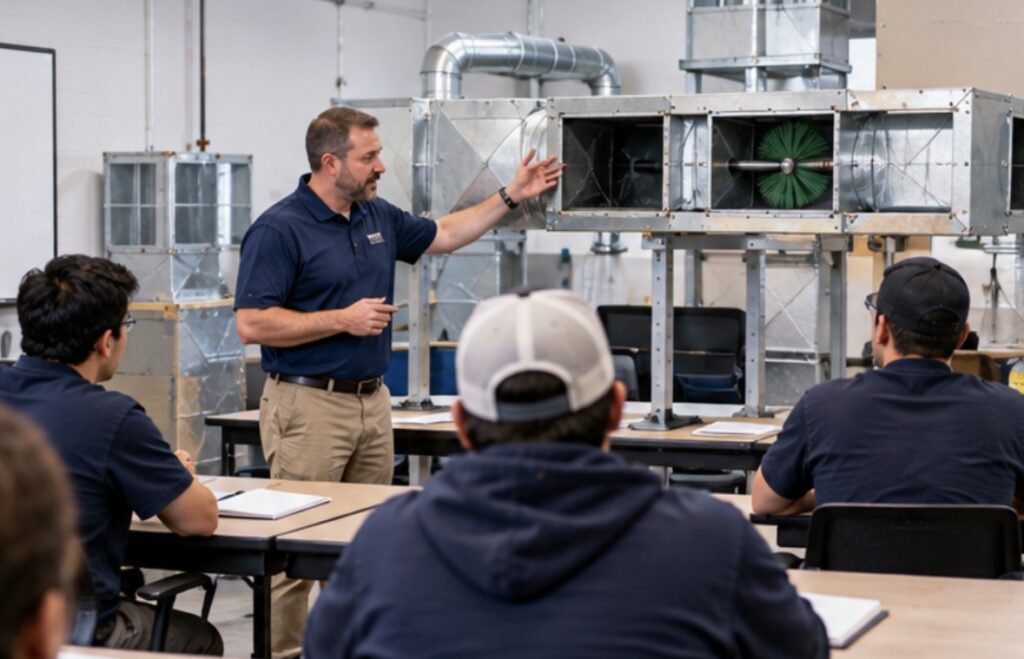
A short program has to be run tightly to be worth anything, which means most of the time should be spent with equipment in your hands rather than in a classroom. Real duct systems, real negative air machines and real access cuts are what build usable skill.
Before you enroll anywhere, it is reasonable to ask a training provider:
- How much of the six days is hands-on rather than classroom instruction
- Whether you will personally operate a negative air machine or only watch
- Which standard the curriculum is built around
- What the instructors have done commercially, not just taught
- Exactly what document you receive at the end and what it represents
- Whether the business side of the trade is covered or skipped
Those answers separate a genuine trade program from a certificate mill, and any provider worth training with will give them to you plainly. The class outline is the right place to start checking.
The last one on that list deserves particular attention. A certificate of completion documents the training you did, and that is genuinely useful, but it is not a state license and it is not a NADCA certification. Any program blurring those three things together is not being straight with you.
Training or Licensing: How Do You Compare the Two?
These get discussed as alternatives when they are really sequential. Comparing them side by side makes it easier to decide what you need first.
| Factor | Duct Cleaning Training | Maryland HVACR Licensing |
|---|---|---|
| Time to complete | Six days | Three years to journeyman, longer to master |
| Entry requirement | No prior license needed | Apprentice license, then supervised hours |
| What you can do | Clean and maintain duct systems | Provide HVACR services by license scope |
| Cost | $1,500 for the full program | Application, exam and ongoing renewal fees |
| Best for | Earning quickly, adding a service | A long-term career as a licensed technician |
Read together, the table points at a sequence rather than a choice. Training gets you working, the apprentice license gets you accumulating hours, and the two can run alongside each other rather than one waiting on the other.
Why Choose Su’Coy CLC for Duct Cleaning Training in Temple Hills, MD
The right program is the one that gets you doing the work rather than reading about it, and that is honest with you about what the certificate at the end represents.
Su’Coy CLC runs a Commercial and Residential Duct Cleaning Class over six days at 4584 Beech Rd in Temple Hills, Maryland. Sessions run 10:00 AM to 2:00 PM Monday through Saturday, tuition is $1,500 for the full program, and the training is entirely hands-on with real equipment and real duct systems. No prior HVAC license is required to enroll.
The curriculum is built around the NADCA ACR Standard and covers negative air machine operation, duct sealing and basic repair, mold recognition protocols, commercial building access, client walkthroughs, job costing and building a recurring client base. Graduates receive a Su’Coy CLC Certificate of Completion.
If you are weighing how to enter the trade in Maryland, see what the class covers and call (301) 901-7732 to ask where it fits your plans.