Skip to content

Looking to kick-start your HVAC career in Temple Hills, Maryland? This guide breaks down the top HVAC certification programs available right here in your community. From essential credentials like EPA Section 608 to advanced options like NATE certification, we’ll walk you through what you need to become a skilled, job-ready technician.
You’ll also get the scoop on hands-on training opportunities, local apprenticeship pathways, and how certifications can boost your wage potential. Whether you’re new to the trade or leveling up, this article highlights everything Temple Hills has to offer future HVAC pros.
What Are the Best HVAC Certification Programs Available in Maryland?

HVAC certification programs in Temple Hills equip students with essential technical skills and industry-recognized credentials. The Maryland HVAC Training Center offers certifications designed to meet the rigorous demands of the heating, ventilation, air conditioning, and refrigeration industries.
Which HVAC Certifications Does Su'Coy Community Learning Center Offer?
At Su’Coy Community Learning Center, we proudly offer the HVAC Universal Technician Training program: an all-in-one HVAC training course designed to help you master the core skills needed to start your career as an HVACR technician. This hands-on, 10-week career training course includes a comprehensive curriculum covering installation, maintenance, and troubleshooting for HVAC systems.
Whether you’re planning to earn your Section 608 certification, prepare for a journeyman license, or dive into hydronics, duct systems, and refrigerant handling, this program equips you with the knowledge and real-world experience needed to succeed in the field. Perfect for those looking to work toward a diploma, associate degree, or grow into an advanced HVAC role.
How Do These Certifications Benefit HVAC Technicians in Temple Hills?
HVAC certifications are more than just paperwork, they’re your ticket to better job security, higher pay, and more opportunities across Maryland and beyond. Here’s how these certifications benefit future HVAC pros in Temple Hills:
- Boost Earning Potential: Certified HVACR technicians often earn significantly more than uncertified peers.
- Meet EPA & State Standards: Certifications like Section 608 ensure you comply with Environmental Protection Agency (EPA) regulations when working with refrigerants.
- Qualify for Better Jobs: Stand out in your next job interview with credentials that prove your expertise in sheet metal, furnace installation, and automation systems.
- Advance Your Career: Move from entry-level work to senior or journeyman roles with the right certifications and continuing education.
- Access Local Workforce Programs: Certification helps you qualify for HVAC apprenticeship programs and continuing education supported by local workforce initiatives and training providers in the 20748 zip code and beyond.
What Are the Specialties of These Programs?
Su’Coy Community Learning Center isn’t just another HVAC training program, we’re your launchpad for a successful career. Here’s what sets our programs apart:
- Gain Real-World Skills: Our curriculum is designed around practical scenarios—from duct design to furnace repair, so you’re ready to hit the ground running in any HVACR technician role.
- Secure Expert Guidance: Work one-on-one with experienced HVAC professionals who offer mentorship and guidance on everything from sheet metal work to smart automation systems. Their insights will prepare you for success, whether you’re seeking an associate degree or starting an HVAC apprenticeship program.
- Boost Career Opportunities: Thanks to our job placement support and strong local employer connections, you’ll have a direct path into the HVAC workforce. Whether you’re aiming for residential or commercial roles, your training gives you the edge.
- Master Cutting-Edge Technology: Stay ahead of the curve with exposure to the latest energy-efficient systems, environmental protection standards, and sustainable hydronics practices. You’ll leave prepared for tomorrow’s HVAC market, today.
How Does Hands-on HVAC Training in Maryland Enhance Certification Success?

How Does Hands-On HVAC Training in Maryland Enhance Certification Success?
Hands-on HVAC training plays a critical role in helping students not only pass their certification exams but also become job-ready from day one. In Maryland, where HVAC technicians are in high demand due to seasonal extremes and strict compliance standards, practical experience sets top candidates apart.
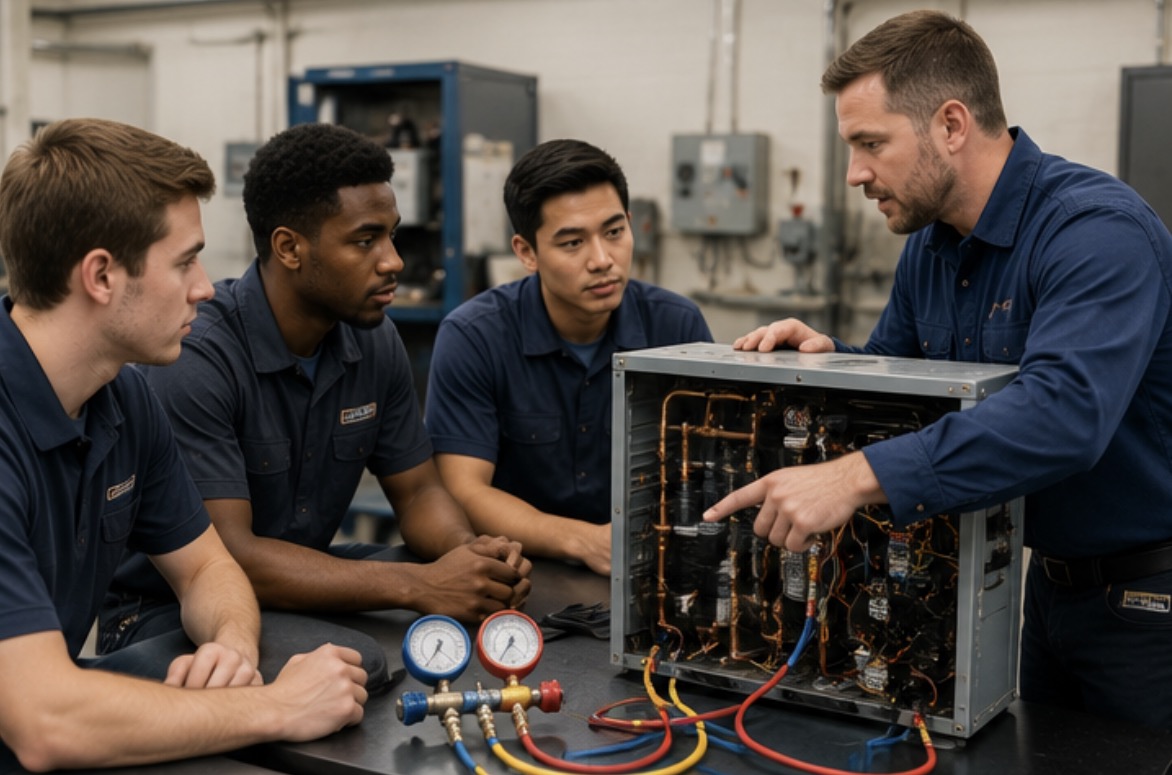
By physically working on HVAC systems, such as furnaces, air conditioning units, ventilation systems, and refrigerant lines students become fluent in diagnostic techniques, safety protocols, and EPA 608 guidelines. Instructors simulate real jobsite conditions, preparing trainees to troubleshoot in high-pressure environments.
Benefits include:
- Real-life simulations enhance critical thinking and adaptability
- Confidence in using essential tools like gauges, multimeters, welding torches, and recovery machines
- Improved test performance on certifications like Section 608, NATE, or HVAC Excellence
- Higher job placement rates and better wage negotiation power
- Stronger resume appeal to air conditioning contractors, electricians, and construction companies hiring in Maryland
How Does Practical Training Prepare Students for Real-World HVAC Jobs?
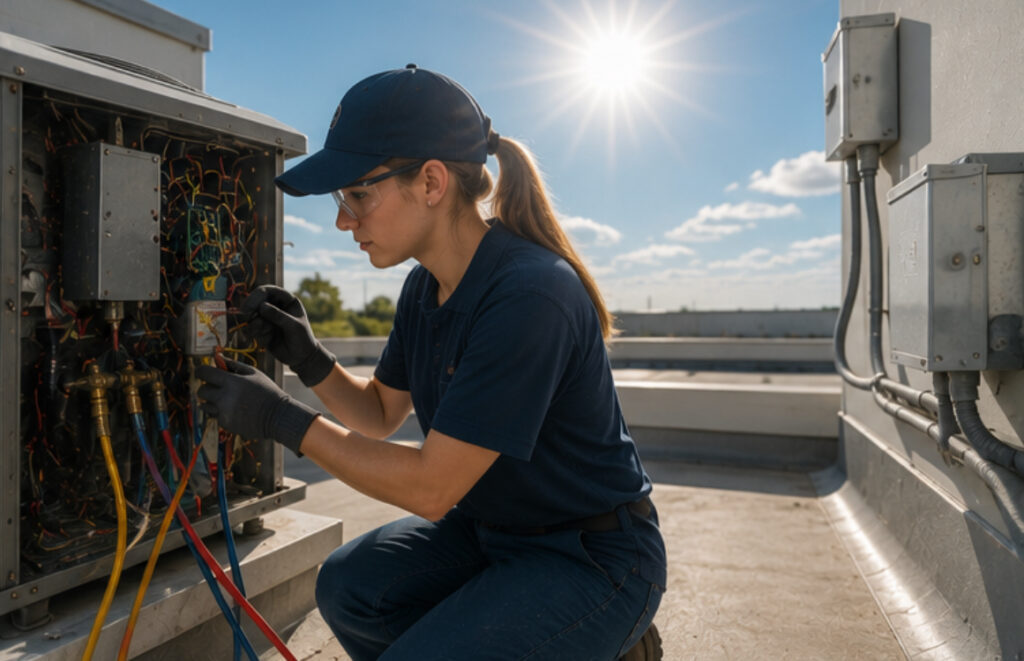
Practical training takes HVAC knowledge from theory to action. Students in Maryland gain valuable on-the-job skills such as brazing copper lines, diagnosing faulty thermostats, reading blueprints, wiring controls, and executing precise refrigerant reclamation.
These experiences build muscle memory and confidence, which directly translate to higher success in both apprenticeship programs and employment interviews.
Why it matters:
- Students become familiar with modern HVAC tools and equipment
- Field-like exercises sharpen communication and teamwork—skills valued by local employers
- Exposure to real systems helps learners identify problems faster and reduce service time
- Enables smoother transition into apprenticeships with plumbers and steamfitters, sheet metal technicians, and journeymen roles
- Builds situational awareness and safety habits that online coursework alone cannot teach
What Are the Differences Between Hands-On and Online HVAC Training?
Both training formats offer value, but they serve different purposes. Online HVAC training delivers flexibility and foundational knowledge like theory, laws of thermodynamics, and EPA regulations. It works well for self-motivated learners or those with busy schedules.
Hands-on training, however, brings the material to life. Instructors guide students through engine mockups, air conditioning systems, and combustion testing in real-time. That kind of tactile, situational learning is essential for certification success and workplace readiness. Most local employers especially in the Maryland and Temple Hills zip codes prefer candidates with practical skills over purely theoretical knowledge.
Hands-On vs. Online HVAC Training: A Comparison
| Feature | Hands-On HVAC Training | Online HVAC Training |
|---|---|---|
| Learning Style | Kinesthetic, tactile, situational | Visual, auditory, theoretical |
| Tool Usage | Real-world experience with gauges, torches, and tools | Limited to demonstrations or simulations |
| Instructor Feedback | Immediate, in-person coaching | Delayed or virtual feedback |
| Flexibility | Fixed schedule and location | High flexibility, learn at your own pace |
| Certification Prep | Practice for EPA 608, NATE, and licensing exams | Focus on written test material |
| Job Readiness | High—graduates are prepared for day-one work | Lower—may require additional on-site experience |
| Motor Skill Development | Strong—students build muscle memory and technique | Weak—physical tasks are not reinforced |
| Employer Preference | Preferred by local contractors and HVAC shops | Sometimes accepted as a supplement |
| Real-World Simulation | Directly replicates worksite conditions | Cannot replicate unpredictable real-world issues |
| Networking Opportunities | High—connect with instructors, peers, and companies | Limited or none |
What Is EPA 608 Certification and Why Is It Essential in Temple Hills Maryland?

EPA 608 certification is a federal requirement that confirms an HVAC technician’s competence in handling and disposing of refrigerants safely. This certification is crucial for environmental protection and compliance with legal standards.
What Is EPA 608 Certification and Why Is It Essential in Temple Hills, Maryland?
EPA 608 certification is a federal requirement that confirms an HVAC technician’s competence in handling and disposing of refrigerants safely. This certification is crucial for environmental protection, regulatory compliance, and legal operation of air conditioning and refrigeration systems.
In Temple Hills and across Maryland, it’s not just a credential, it’s a job requirement. Employers, especially licensed air conditioning contractors, seek out technicians with 608 certification because it shows professionalism, technical skill, and commitment to safety.
What Are the Requirements to Obtain EPA 608 Certification?
Candidates must pass an EPA-approved exam covering refrigerant management, leak detection, recovery procedures, and safe disposal. Training programs in Maryland blend classroom instruction with hands-on experience using tools like recovery machines and gauges. Students also learn policy updates, chemical handling, and record-keeping responsibilities required by the Clean Air Act.
- Basic HVAC knowledge is required
- Courses include study guides, EPA regulations, and refrigerant types (e.g., R-410A, R-22)
- Training available for all levels, from apprentices to experienced techs
What Career Opportunities Open With EPA 608 Certification in Temple Hills?
With an EPA 608 certification, technicians become eligible for more advanced HVAC jobs across Maryland, including installation, service, diagnostics, and system design roles involving refrigerants. Many local employers and union-based apprenticeship programs require this certification for entry.
In Temple Hills and nearby towns, certified techs are more likely to earn higher wages, qualify for bonuses, and be considered for roles with government and construction contracts. It also boosts your potential for becoming a journeyman or securing a full HVAC license down the line.
- Priority in safety-critical roles like compressor repair and refrigerant reclamation
- Competitive salaries—often above the 75th percentile locally
- Fast-tracked career advancement into supervisory or technician lead roles
- Higher trust from clients and air conditioning contractors
Meet The Experienced Instructor Behind Su'Coy Community Learning Center- Derrick Su’Coy Conyers

Derrick Su’Coy Conyers isn’t just teaching HVAC, he’s lived it for over 30 years. As a licensed master technician and owner of both Su’Coy Community Learning Center and Su’Coy HVAC Heating/AC & Duct Cleaning, he brings real-world knowledge to every lesson.
His hands-on experience in residential, commercial, and duct cleaning jobs means students learn from someone who’s actually done the work not just studied it. Derrick believes you can’t master HVAC by reading a book. That’s why his approach is practical, straight from the field, and focused on what it really takes to succeed.
He also encourages students to think big whether you want to land a job or eventually run your own business. With Derrick, you’re not just getting an instructor, you’re getting a mentor who’s walked the path himself and knows exactly how to guide you forward.
Ready to Launch Your HVAC Career in Temple Hills?
Don’t wait to start building your future in a high-demand industry. Enroll in Su’Coy Community Learning Center’s hands-on HVAC Universal Technician Training program and get certified, job-ready, and confident—fast.
- Gain real-world experience
- Prepare for EPA 608 and more
- Step into a career with real earning power