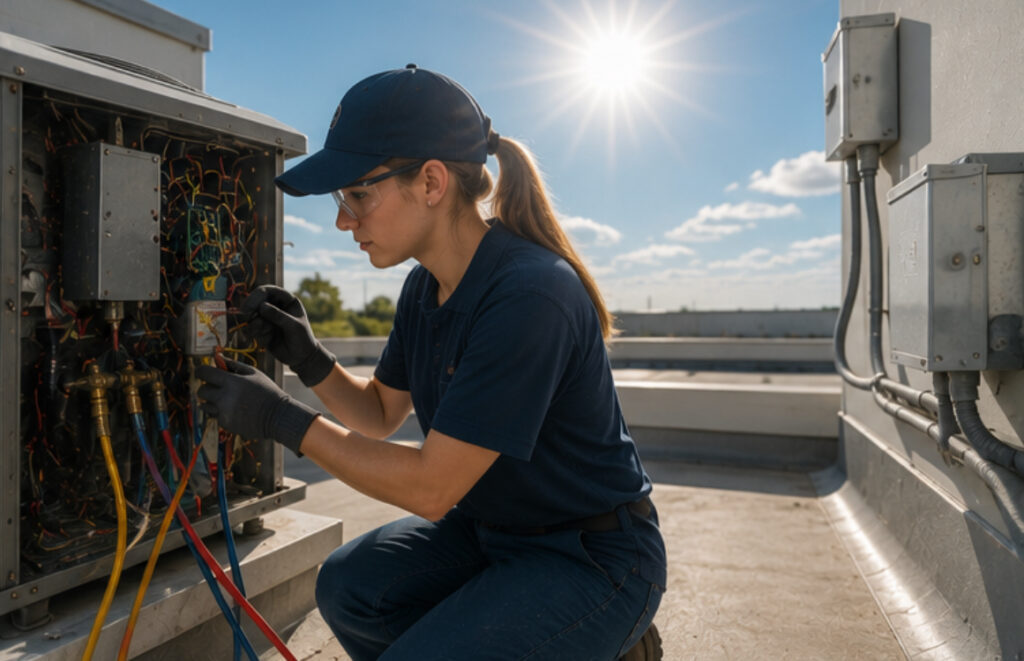
Summer is the busiest season for HVAC technicians across Maryland, Washington, DC, and Northern Virginia. When temperatures climb into the 90s and humidity rises, air conditioners run for longer periods, emergency service calls increase, and technicians are expected to diagnose problems quickly under demanding conditions. For HVAC students preparing to enter the workforce, understanding how summer changes the job is just as important as learning how an air conditioner operates.
The skills employers expect during a July heatwave are often different from those used during routine maintenance in the spring. Entry-level technicians must learn how to troubleshoot cooling problems efficiently, work safely in high temperatures, and communicate clearly with customers who may have lost cooling in extreme weather. Developing these practical skills during training helps students transition more confidently from the classroom to the field.
Why Is Summer the Busiest Season for HVAC Technicians?
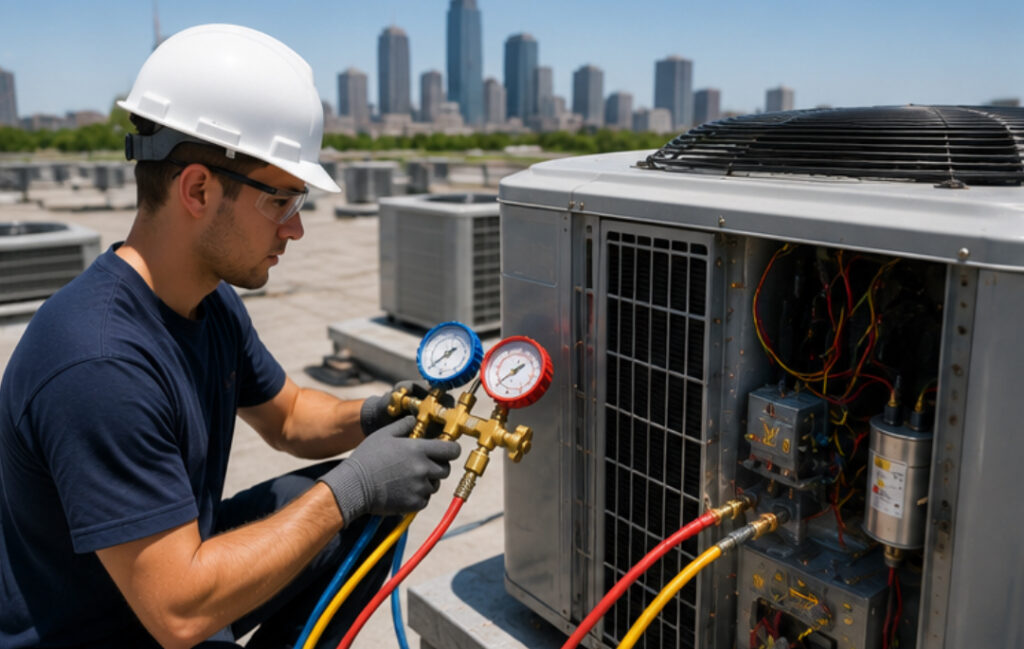
Extreme summer temperatures place continuous demand on residential and commercial cooling systems. Air conditioners that performed well during mild weather often begin showing signs of wear when outdoor temperatures remain above 90°F for several days. Weak capacitors, dirty condenser coils, restricted airflow, and refrigerant issues become much more noticeable, leading to a sharp increase in service calls.
For HVAC students, this means entering the field during summer requires the ability to diagnose problems accurately while working efficiently under pressure. Employers value technicians who can follow a logical troubleshooting process instead of replacing parts through trial and error.
| Summer HVAC Condition | Skill Students Need to Develop |
|---|---|
| Long AC runtime | System performance evaluation |
| High outdoor temperatures | Accurate cooling diagnostics |
| Increased emergency calls | Efficient troubleshooting under pressure |
| Heavy cooling demand | Preventive maintenance knowledge |
| High customer expectations | Professional communication and problem-solving |
Understanding why equipment fails during peak cooling season prepares students for the situations they’ll encounter most often during their first HVAC job.
Why Does Refrigerant Performance Become More Important During Heatwaves?
One of the first skills new HVAC technicians develop is understanding how refrigerant affects cooling performance. During extreme summer temperatures, the refrigeration cycle operates under higher pressures, making accurate diagnostics even more important. A system with a small refrigerant leak or improper charge may still cool reasonably well during spring but struggle to maintain indoor comfort once temperatures rise.
Instead of assuming every warm house has low refrigerant, students learn to evaluate the entire system before making a diagnosis.
Pressure Readings Must Be Interpreted Correctly
Outdoor temperature directly affects refrigerant pressures. HVAC students learn how to interpret gauge readings based on operating conditions instead of relying on fixed pressure values.
Superheat and Subcooling Matter
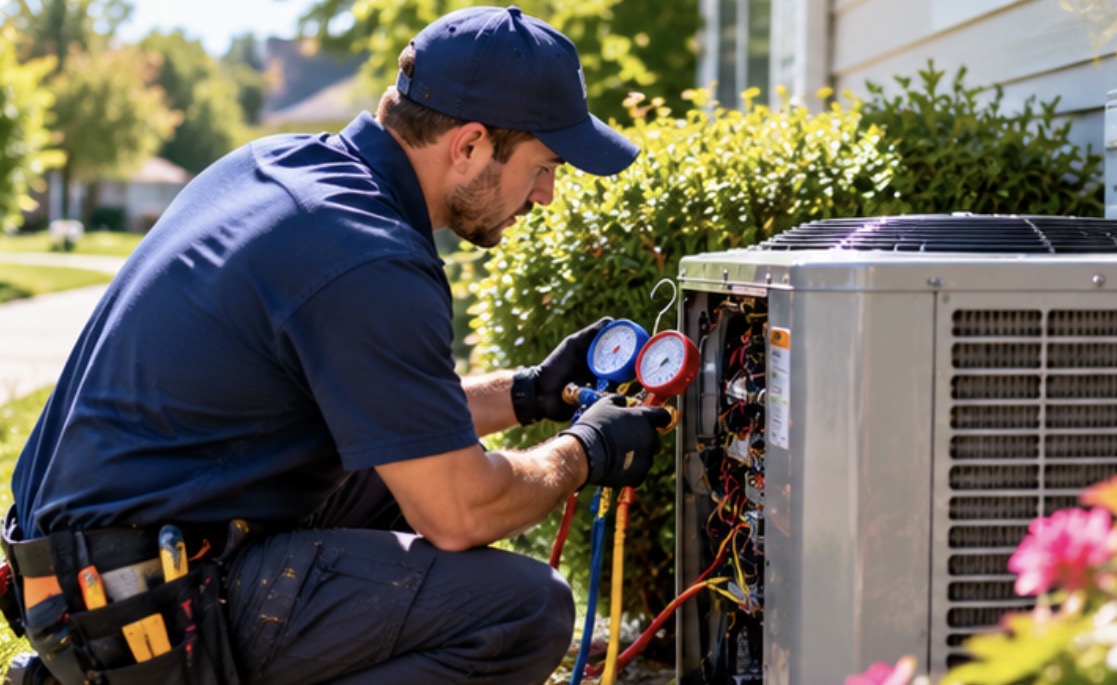
Modern HVAC diagnostics focus on measuring superheat and subcooling to verify the refrigerant charge accurately. These measurements help technicians determine whether cooling issues are caused by refrigerant, airflow restrictions, or another system problem.
EPA Section 608 Best Practices
Students also reinforce the proper refrigerant recovery and charging procedures required under EPA Section 608, ensuring systems are serviced safely while complying with federal regulations.
Developing these diagnostic skills during training prepares students for one of the most common types of summer service calls.
How Does High Heat Change the Way HVAC Systems Are Diagnosed?
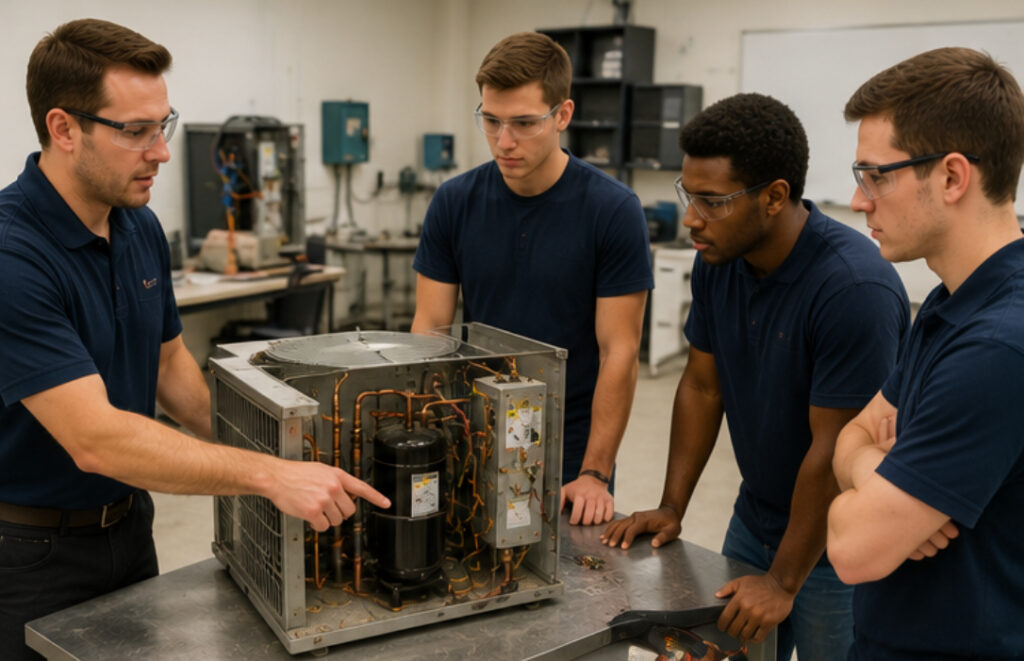
Diagnosing an air conditioner during a Maryland summer requires more than checking whether it’s blowing cold air. Experienced technicians evaluate how the entire system performs while operating under maximum cooling demand. Learning this process early helps students become more confident and accurate troubleshooters once they begin working in the field.
| Diagnostic Skill | Why It’s Important During Summer |
|---|---|
| Airflow measurement | Confirms the evaporator coil receives sufficient airflow. |
| Temperature split testing | Verifies the system is removing heat efficiently. |
| Electrical component testing | Identifies weak capacitors and contactors before they fail. |
| Condenser coil inspection | Detects dirt buildup reducing heat rejection. |
| Thermostat operation verification | Confirms the control system is operating correctly before replacing components. |
These diagnostic procedures help students understand why an air conditioner struggles during extreme heat instead of simply identifying what component has failed. This systematic approach builds stronger troubleshooting habits and prepares future technicians for real-world HVAC service calls.
What Safety Skills Become More Important During Summer Service Calls?
Extreme summer temperatures create some of the most demanding working conditions HVAC technicians face. During Maryland summers, students must learn to work safely around energized equipment, hot mechanical spaces, and cooling systems operating under heavy demand. Building these safety skills during training helps prepare future technicians for the challenges they’ll encounter on real service calls.
Working Safely Around Live Electrical Components
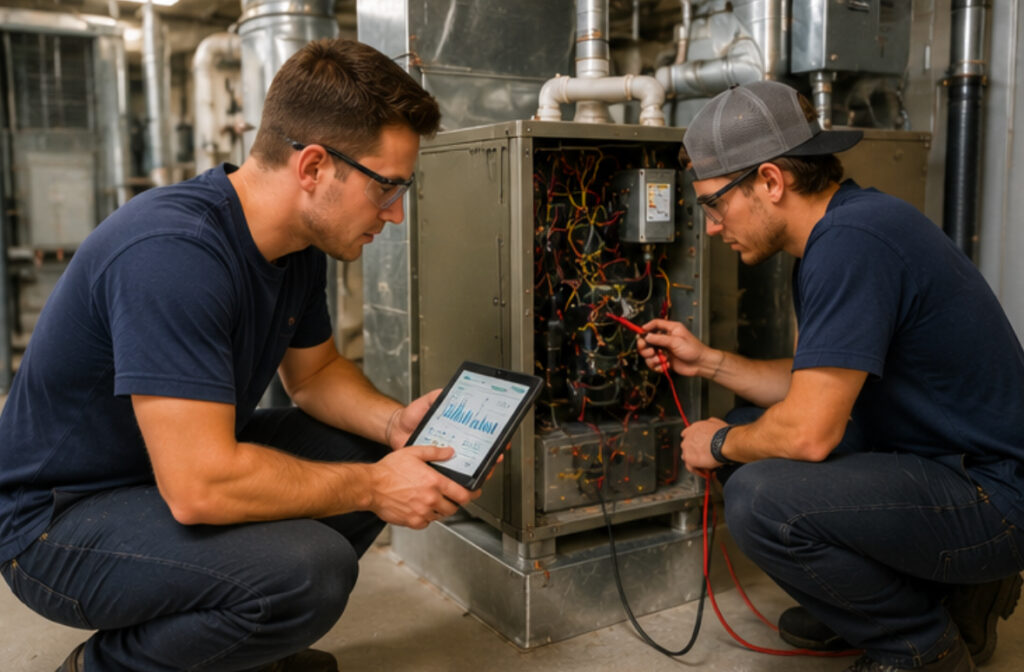
Many summer service calls require technicians to test capacitors, contactors, compressors, and blower motors while the system is operating. Students learn safe meter usage, electrical troubleshooting procedures, and when to isolate power before servicing HVAC equipment.
Recognizing Heat Stress on the Jobsite
Attics, rooftops, and mechanical rooms can become dangerously hot during the summer. Students learn to recognize the early signs of heat exhaustion, stay properly hydrated, schedule breaks when needed, and work safely in high-temperature environments.
Using HVAC Diagnostic Tools Correctly
Accurate diagnostics begin with using the right tools properly. Through the HVAC Universal Training Program, students gain hands-on experience using digital manifolds, clamp meters, thermometers, and airflow instruments to evaluate cooling system performance safely and accurately.
Following Safe Refrigerant Handling Procedures
Summer places HVAC systems under higher operating pressures, making proper refrigerant handling even more important. Students reinforce EPA Section 608 best practices for refrigerant recovery, charging procedures, leak prevention, and environmental compliance while working safely around pressurized systems.
Developing these safety habits early helps students build confidence, reduce workplace risks, and prepare for successful careers as professional HVAC technicians.
Why Do Customers Expect Better Communication During Summer Emergencies?
When an air conditioner stops working during a 95°F Maryland summer day, homeowners are often uncomfortable, frustrated, and looking for answers. Technical knowledge is important, but employers also value technicians who can explain problems clearly and professionally.
| Customer Situation | Communication Skill Students Should Learn |
|---|---|
| No cooling during a heatwave | Explain the diagnosis in simple, non-technical language. |
| Emergency repair visit | Discuss repair options without creating unnecessary pressure. |
| Preventive maintenance appointment | Educate homeowners on how maintenance improves system performance. |
| Equipment replacement discussion | Explain why repair or replacement is recommended using inspection findings. |
| First-time service customer | Build trust through professionalism and clear communication. |
These communication skills are developed alongside technical training because successful HVAC technicians solve both equipment problems and customer concerns.
How Can HVAC Students Prepare Before Their First Summer Service Season?
Summer is when many new HVAC technicians experience the fast pace of the trade for the first time. As temperatures rise across DMV, service calls increase, cooling systems operate under heavier loads, and technicians are expected to diagnose problems quickly while working safely in challenging conditions. Preparing for these real-world demands before your first summer season helps you build confidence, apply your classroom training effectively, and transition more smoothly into the field.
Before beginning your first cooling season, focus on:
- Mastering HVAC Diagnostics: Learn how airflow, refrigerant, electrical components, and controls work together before diagnosing equipment.
- Practicing With Modern Equipment: Gain hands-on experience servicing condensers, evaporator coils, heat pumps, and recovery machines through the HVAC Universal Training Program.
- Preparing for EPA Section 608 Certification: Complete refrigerant training before entering the workforce so you’re qualified to handle regulated refrigerants.
- Developing Professional Work Habits: Accuracy, safety, and continuous learning become especially valuable during the industry’s busiest season.
Students who enter the workforce prepared for summer service calls often build confidence faster because they’ve already practiced many of the situations they’ll encounter on the job.
Why Choose Su’Coy Career and Learning Center (CLC) to Prepare for Real-World HVAC Service?

Summer is when HVAC technicians develop some of their most valuable field experience, and the best way to prepare is through hands-on training before stepping onto a jobsite. At Su’Coy Career and Learning Center (CLC), our HVAC Universal Training Program prepares students to diagnose cooling systems, work safely under demanding conditions, and build the practical skills employers expect from entry-level technicians.
With 50+ years of combined HVAC instructional experience, our instructors train students using real equipment and real diagnostic procedures—not just classroom theory. In our HVAC Universal Training Program, you’ll graduate with an EPA Section 608 Certification, an HVAC apprenticeship license, and the knowledge and confidence to begin your HVAC career throughout Maryland, Washington, DC, and Northern Virginia.