Before enrolling in any trade program, it is reasonable to ask whether the training will actually improve your chances of getting hired. HVAC is a hands-on career, so completing a course is only one part of becoming employable. You also need relevant certifications, practical skills, and enough understanding of heating, cooling, refrigeration, and electrical systems to contribute safely in an entry-level role.
For someone considering HVAC as a career in Maryland, the better question is not simply, “Will this certificate get me a job?” It is, “What will I know and be able to demonstrate after training, and which qualifications will I have when I start applying?”
This guide looks at that process from a practical perspective. We will cover the certifications that can matter to employers, the value of hands-on training, what entry-level HVAC work can look like, and how training fits into the larger process of building a career in the trade.
What Do HVAC Employers Look for in a New Technician?

Employers do not expect someone entering the trade to know everything on the first day. A new technician is usually still developing field experience. What can make a candidate more useful from the beginning is a combination of basic technical knowledge, relevant credentials, and some experience working with HVAC tools and equipment.
EPA Section 608 certification is particularly important for technicians who will handle regulated refrigerants. Federal requirements mean that technicians performing covered refrigerant work need the appropriate EPA certification. Other credentials and training can also demonstrate technical knowledge, but their importance can vary depending on the employer and the position.
Qualifications That Can Strengthen an Entry-Level Resume
| Qualification or Experience | Why It Can Matter |
|---|---|
| EPA Section 608 | Required for covered refrigerant handling |
| HVAC fundamentals | Demonstrates understanding of basic system operation |
| Electrical training | Useful for diagnosing controls and electrical components |
| Refrigeration training | Builds understanding of the refrigeration cycle |
| Hands-on lab work | Provides practical experience with tools and equipment |
| NATE preparation | Can support further professional development |
| Maryland licensing preparation | Helps students understand state requirements |
The important point is that certification does not replace experience. An employer hiring an entry-level technician knows the candidate will need additional training in the field. What employers can look for is evidence that the candidate has taken the first steps seriously and understands the fundamentals.
Why Hands-On HVAC Training Matters When You’re Looking for Work
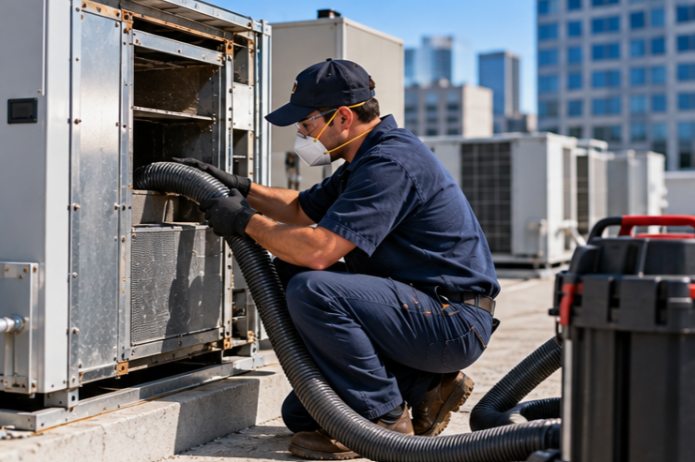
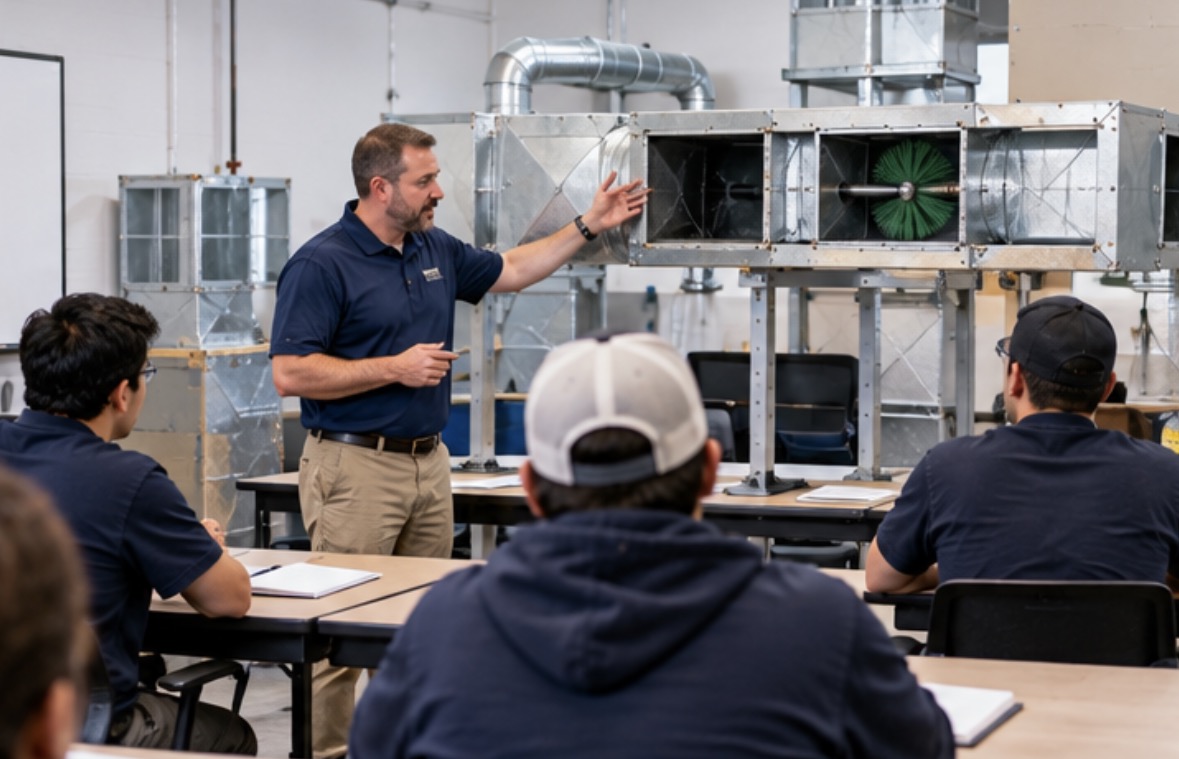
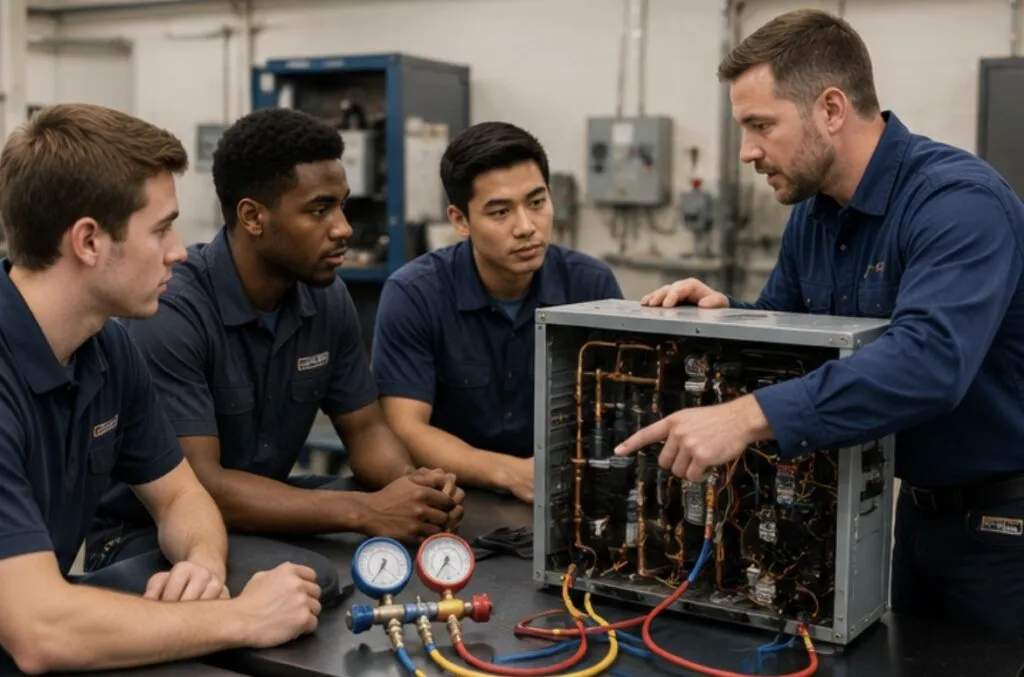
HVAC is difficult to learn entirely from a textbook. A technician eventually needs to work with meters, gauges, electrical components, refrigeration equipment, airflow measurements, and other tools while diagnosing real equipment. Hands-on training gives students an opportunity to become familiar with that environment before their first day on a jobsite.
From Theory to Practical Skills
A classroom lesson might explain how a refrigeration cycle works. Hands-on training gives you the opportunity to connect that explanation to actual equipment and understand what the components look like, how they interact, and how technicians use tools during diagnosis.
The same applies to electrical troubleshooting. Knowing what a capacitor, contactor, motor, or control circuit does is useful, but a technician also needs to become comfortable taking measurements and following a diagnostic process.
Hands-on training can help build familiarity with:
- Refrigeration systems: Understanding the basic refrigeration cycle and system components.
- Electrical controls: Learning how electrical components work together.
- Diagnostic tools: Becoming familiar with tools used to test HVAC equipment.
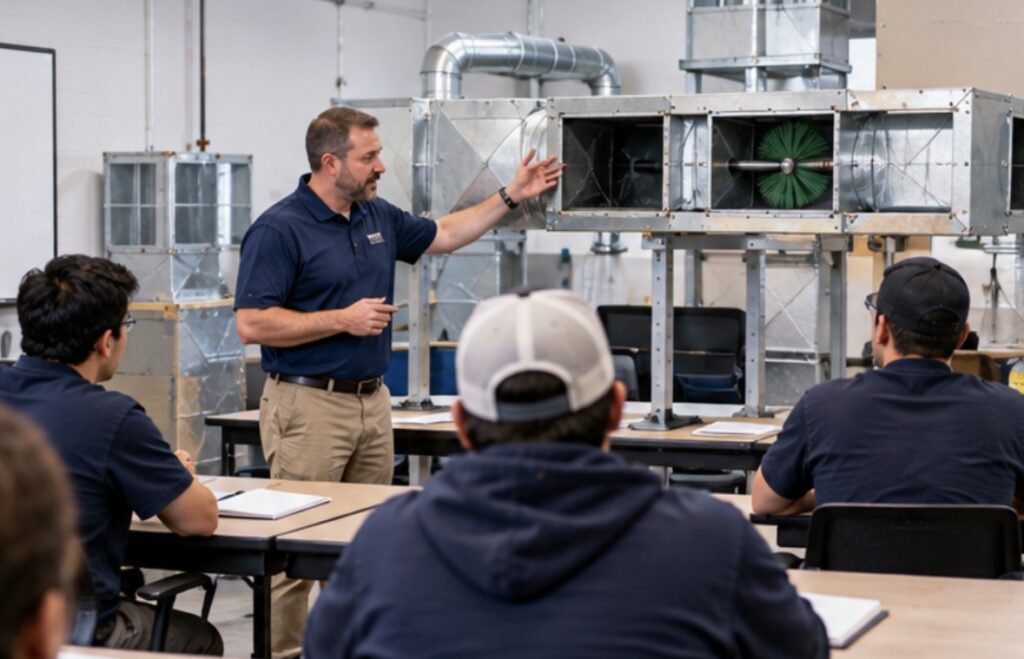
- Airflow: Understanding how ventilation and air movement affect system performance.
- Equipment operation: Connecting classroom concepts with actual HVAC equipment.
That experience does not make someone an experienced service technician immediately. It does, however, give a new candidate something concrete to discuss during an interview and a foundation to build upon once they begin working in the field.
What Kind of HVAC Job Can You Get After Training?
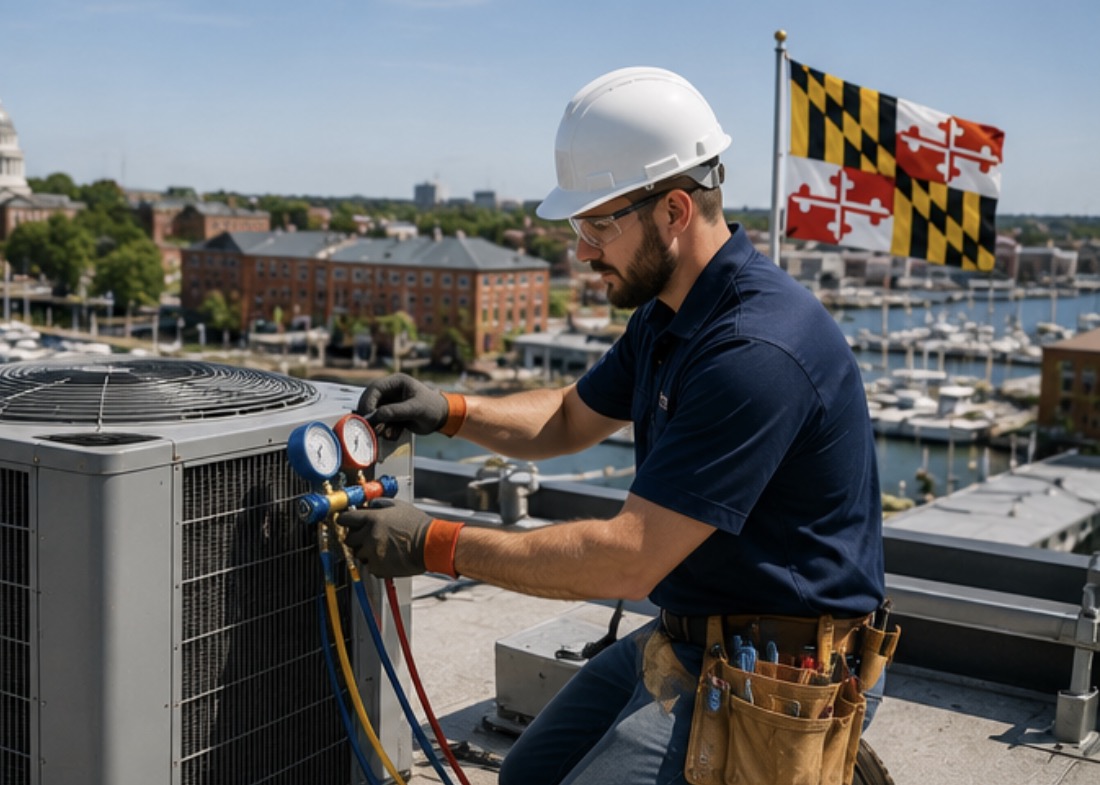
Completing an HVAC training program does not necessarily mean walking directly into a senior technician position. Most people entering the trade start in roles where they can continue learning alongside experienced technicians.
The exact position depends on the employer, qualifications, previous work experience, and certifications held at the time of application.
Common Entry-Level HVAC Positions
- Installer helper: Assists experienced installers with equipment installation and jobsite tasks.
- HVAC apprentice: Develops field skills while working under more experienced professionals.
- Maintenance technician: Performs basic inspections and routine maintenance tasks.
- Junior service technician: Assists with diagnosis and repair while continuing to develop technical skills.
These first positions can be valuable because HVAC is a career where practical experience accumulates over time. A technician who starts by assisting with installations or maintenance can eventually develop the skills needed for more complicated diagnostics, repairs, and system replacements.
The first job should therefore be viewed as the beginning of the career rather than the final result of training.
How Long Does It Take to Become Job-Ready?
There is an important difference between becoming trained and becoming highly experienced. A focused training program can provide the fundamentals and prepare a student for relevant certifications, but competence continues to develop through field experience.
An eight-week program can provide a concentrated starting point for someone entering HVAC, particularly when classroom instruction is combined with hands-on work. After completing training, the next stage is applying those skills in an entry-level position and continuing to learn from experienced technicians.
A Practical Career Progression
| Stage | Main Focus |
|---|---|
| Training | Learn HVAC fundamentals and basic practical skills |
| Certification | Earn relevant credentials such as EPA Section 608 |
| First job | Apply skills while learning from experienced technicians |
| Field experience | Develop diagnostic and installation abilities |
| Advancement | Take on more complex work and pursue additional credentials |
This is why prospective students should be cautious about programs that imply a short course alone will make someone an expert. Good training should give you a foundation. Your ability to turn that foundation into a career comes from applying it consistently in the field.
What Employers Can Learn From Your Training Experience
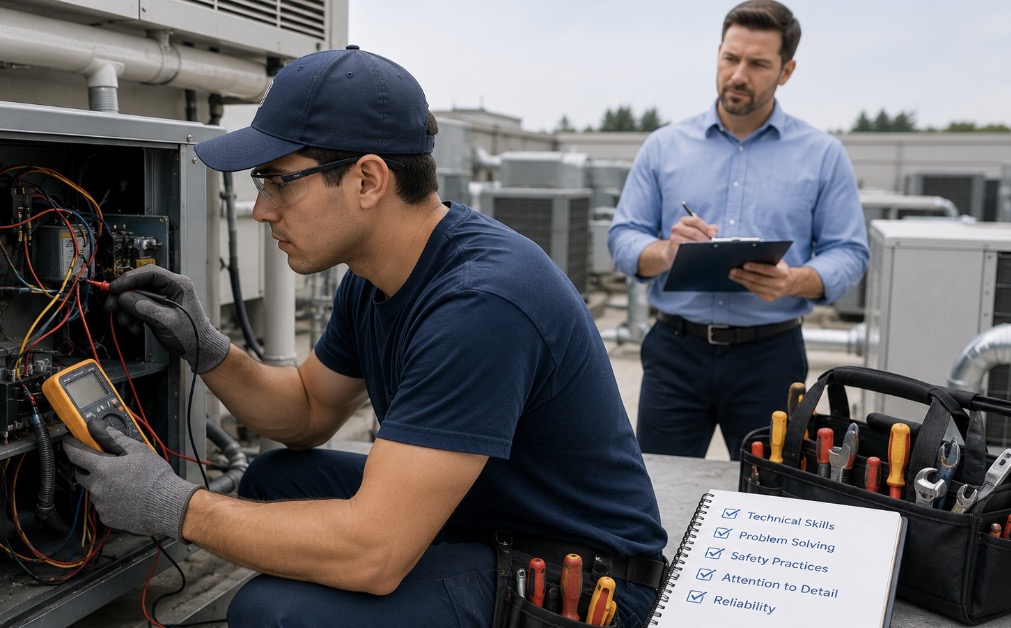
When you apply for an entry-level HVAC position, your training gives you more to discuss than the name of the program on your resume. Employers may want to know what equipment you worked with, which tools you used, what types of troubleshooting exercises you completed, and which parts of HVAC you feel most comfortable with.
Be prepared to explain your experience in practical terms rather than simply saying you completed a course.
Be Ready to Discuss
- Equipment: What types of heating and cooling systems did you work with?
- Tools: Which diagnostic and service tools have you used?
- Troubleshooting: What problems have you practiced identifying?
- Safety: What procedures did you learn before working on equipment?
- Refrigeration: What did you learn about refrigerant circuits and EPA requirements?
- Electrical: What basic electrical testing and controls did you practice?
This can make an interview more useful for both you and the employer. You are showing what you have actually been exposed to while being honest about the areas where you still need field experience.
How Certifications Fit Into Your First HVAC Job
Certifications can strengthen your application, but each one serves a different purpose. EPA Section 608 certification is especially relevant if your future position involves handling regulated refrigerants. Other certifications or licensing requirements may depend on the position, employer, and type of HVAC work you plan to perform.
Rather than collecting credentials simply to make your resume longer, focus on qualifications that match the work you want to do.
Build Your Credentials Around the Job
For example, someone pursuing residential service work may want a strong foundation in refrigeration, electrical troubleshooting, airflow, and equipment diagnostics. Someone starting in installation may place greater emphasis on equipment setup, refrigerant connections, electrical connections, ductwork, and installation procedures.
A useful training path should help you understand which credentials apply to your intended role and what additional requirements you may need to meet after graduation.
Use Training to Make Your First Job Search More Focused
Once your training is complete, avoid applying randomly to every HVAC position you see. Read each job description and identify what the employer actually wants from an entry-level candidate.
Look for positions that mention training opportunities, apprenticeships, installation assistance, maintenance, or junior technician responsibilities. These roles can give you a realistic entry point while allowing you to develop the field experience that a short training program cannot provide on its own.
Before Applying, Prepare These Items
- Resume: List your HVAC training, certifications, previous work experience, and relevant technical skills.
- Credentials: Keep copies of applicable certifications available.
- Training details: Know the equipment, tools, and systems you worked with.
- References: Identify people who can speak about your reliability and work ethic.
- Interview examples: Prepare a few examples of practical problems you worked through during training.
If you are still comparing programs, an HVAC Universal Technician class can provide a structured starting point for building the technical and practical foundation needed before entering the field.
What Can Help You Stand Out Beyond Certification?
Two applicants can have the same entry-level certification and still make very different impressions during an interview. Employers also look at whether you show up reliably, communicate clearly, follow safety procedures, and demonstrate a willingness to learn.
HVAC work involves entering customers’ homes, working around expensive equipment, coordinating with other trades, and sometimes responding to uncomfortable conditions. Technical ability matters, but professionalism matters too.
Skills That Matter on the Job
- Reliability: Arrive when expected and complete assigned work.
- Safety awareness: Follow procedures rather than taking shortcuts.
- Communication: Explain problems clearly to customers and coworkers.
- Problem-solving: Work through a diagnosis instead of guessing.
- Work ethic: Stay productive while learning from experienced technicians.
- Adaptability: Be prepared to work on different equipment and systems.
These qualities cannot be learned from a certificate alone. They develop through work experience, mentorship, and consistent practice, which is why your first HVAC position is such an important part of the career-building process.
What a Realistic First-Year HVAC Path Can Look Like
Your first year should be viewed as a period of skill development rather than a race toward an advanced technician title. You may spend significant time assisting with installations, performing maintenance, learning diagnostic procedures, handling tools, and observing experienced technicians.
Over time, you’ll encounter equipment and problems that cannot be fully replicated in a classroom. Each service call, installation, and maintenance visit adds another piece to your practical knowledge.
A realistic progression might look like this:
| Period | Career Focus |
|---|---|
| Training | Build foundational HVAC knowledge and hands-on familiarity |
| First few months | Learn company procedures and work alongside experienced technicians |
| 6–12 months | Take on more routine tasks with increasing independence |
| Beyond one year | Develop deeper diagnostic, installation, or maintenance expertise |
The exact timeline varies considerably by employer and individual. The important point is that your initial training gives you a starting point, while field experience turns that foundation into a working skill set.
Why Su’Coy CLC Can Be a Practical Starting Point
For someone in Maryland who wants structured preparation before entering the HVAC workforce, Su’Coy Community Learning Center’s Universal Technician program provides a focused path through foundational HVAC concepts, hands-on training, and preparation for relevant industry credentials.
The goal should not be to promise that eight weeks automatically guarantees employment. Instead, the value of the training is giving you a foundation you can take into the job market: technical knowledge, practical exposure, certification preparation, and a clearer understanding of what HVAC work actually involves.
If you’re considering an HVAC Universal Technician class in Temple Hills, you can use the program as a starting point and then build your career through entry-level employment, field experience, additional training, and progressively more advanced responsibilities.