You are deciding whether to spend ten weeks and your own money training for this trade, and the question underneath is whether the work holds up in February. A summer rush followed by a quiet winter is a different career from a steady one, and nobody tells you which this is.
Both seasons carry genuine work in Maryland, because the state runs hot summers and cold winters that each push equipment to failure. The season that matters more to you is whichever one you are not trained for, and this guide shows why that choice reaches further than your first paycheck.
How Do Summer and Winter HVAC Workloads Compare?
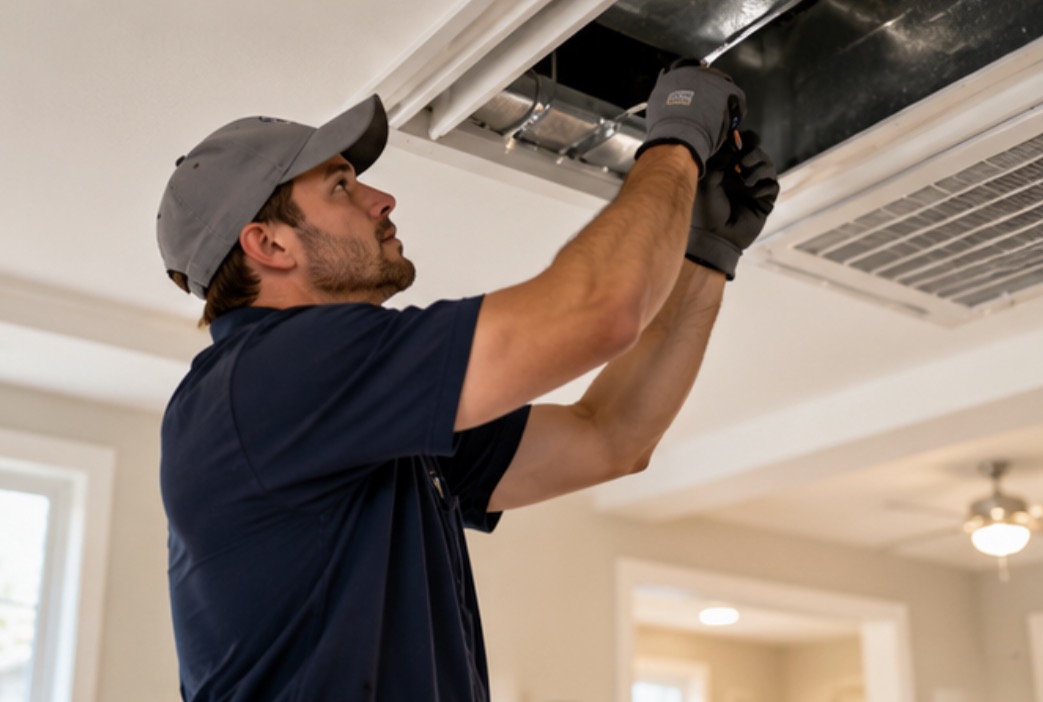
Summer brings the sharper spike. Winter brings the longer stretch. Over a full year the hours come out closer than most students expect, and a technician qualified on both halves of the system rarely sees a genuinely empty week in either direction.
What separates the two is the shape of the demand. Cooling failures arrive in concentrated waves during heat waves, with dozens of systems quitting in the same few days. Heating failures spread across a longer season, since furnaces run hard from December into March rather than peaking across one brutal weekend.
That difference matters when you picture the job. Summer is overtime and back-to-back emergency calls compressed into a handful of weeks. Winter is a steadier grind of no-heat calls across months. Neither is the slow season, and each one punishes a technician trained on only half the equipment.
Why Does Summer Bring the Biggest Spike in HVAC Calls?
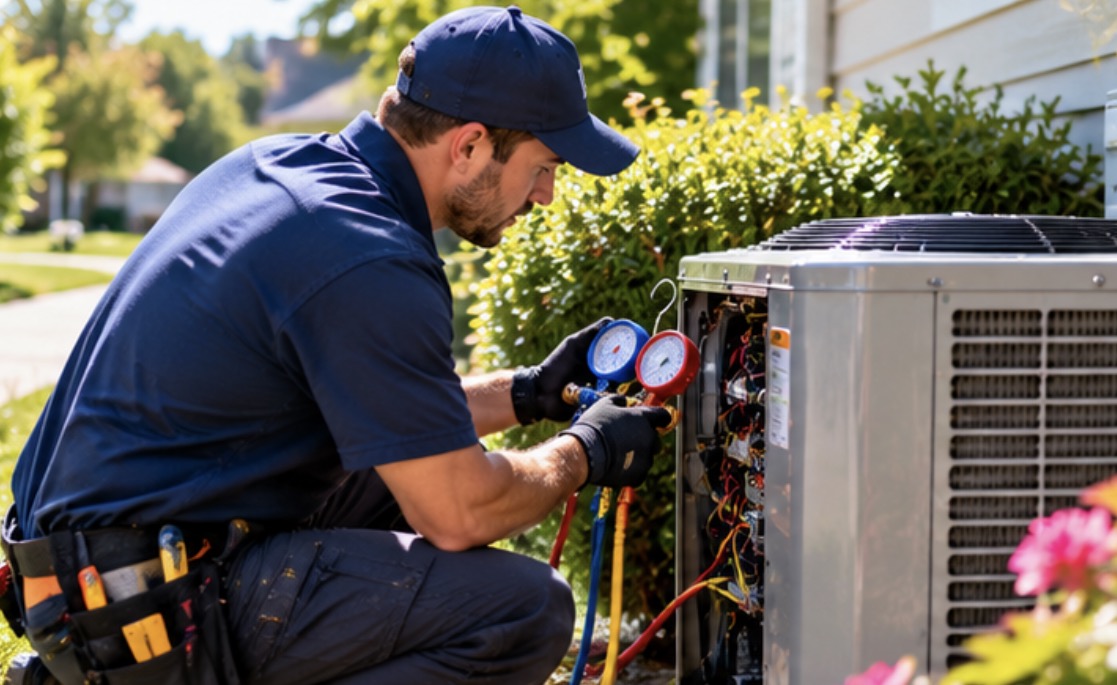
Sustained heat is what finally kills marginal equipment. An air conditioner that limped through last season runs for hours without a break during a heat wave, and the weakest component gives out: a drifting capacitor, a tired compressor, a condenser fan motor that has been noisy since spring.
Those failures land together rather than spreading out. Systems that were coping stop coping in the same week, and calls stack faster than companies can answer them. For a technician that means long days and steady overtime, which is why summer carries the reputation it does among people outside the trade.
The catch arrives when the heat breaks. A technician who can only service cooling watches the phone go quiet in September, and stays quiet until spring. A companion post on how extreme summer temperatures change the skills students need covers what that peak stretch demands of you on the job.
Why Is Winter Still a Busy Season for HVAC Technicians?
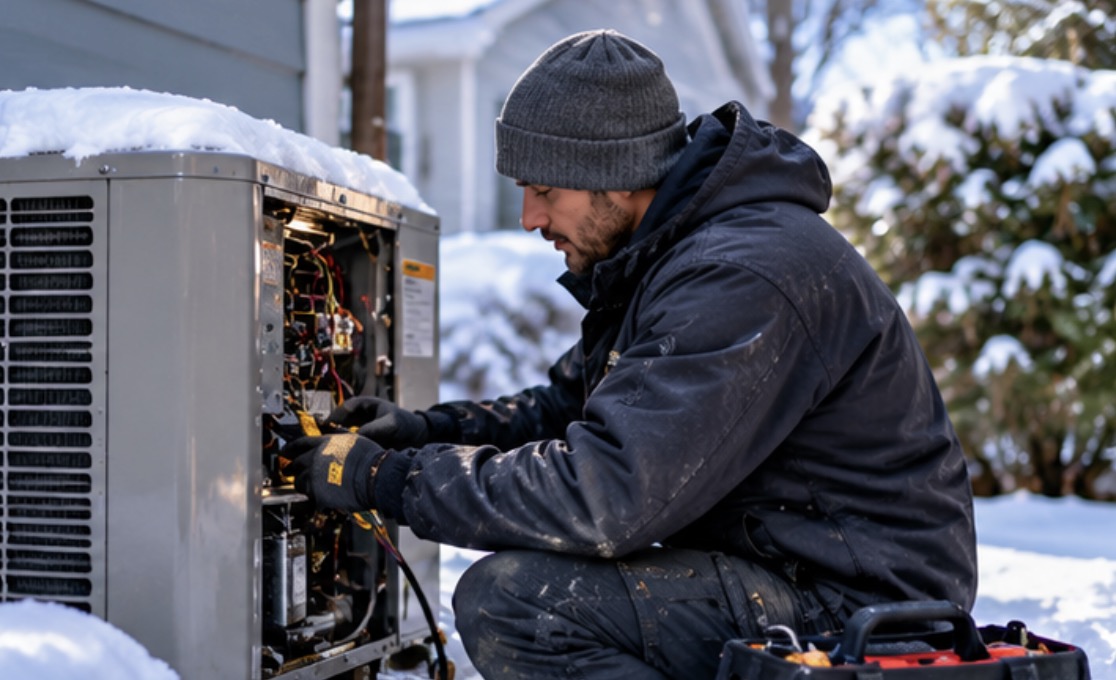
Heating season has a sharp on-switch and a long tail. January in Temple Hills averages a low near 29°F and a high near 43°F, according to Weather Spark, which is cold enough to run furnaces and heat pumps hard for weeks without relief rather than for a few cold mornings.
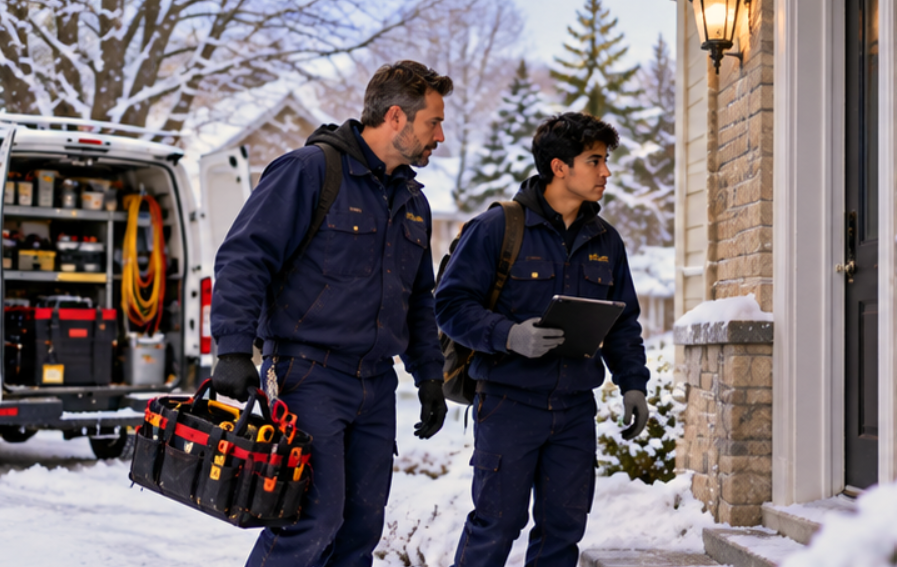
Much of the housing stock across Prince George's County is older, carrying furnaces and boilers that gave out quietly over the summer and reveal it on the first hard freeze. A technician's week fills with no-heat calls, and a dead furnace at 29 degrees is an emergency rather than an inconvenience.
- Failed ignitors and flame sensors on the first genuinely cold morning
- Cracked or corroded heat exchangers found during safety inspections
- Heat pumps icing over and struggling through sustained cold
- Control and thermostat faults that only appear under heating load
- Boiler problems in older buildings and small commercial properties
That last line is worth noticing. Boiler work sits outside what a standard residential course covers, and a boiler and light commercial class adds a whole category of winter work that most entry-level technicians in this market are not qualified to take on at all.
What HVAC Work Fills the Spring and Fall?
Between the two peaks the work shifts from emergencies to planned jobs, and this is the part of the calendar students never picture. Homeowners book tune-ups, companies schedule replacements, and the work becomes predictable rather than frantic. It is also where a technician's income stops swinging.
Replacements cluster here because nobody wants a system torn out during a heat wave or a freeze. A homeowner who struggled through August often replaces in September. That planned work smooths the calendar, and installation skill is what lets you claim it rather than waiting for the next emergency.
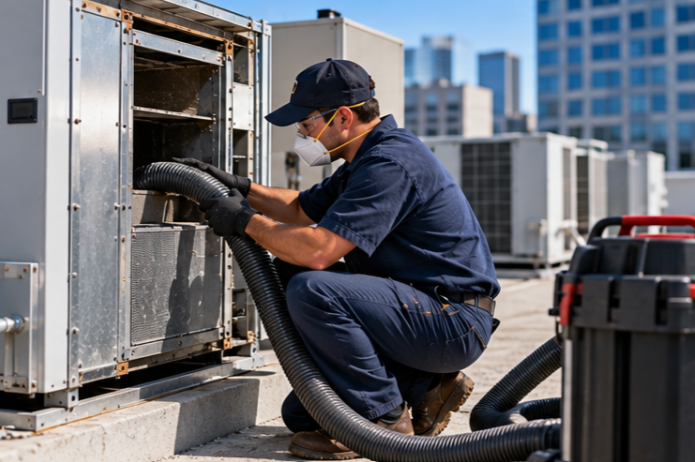
Indoor air work fits the same window. A commercial and residential duct cleaning class teaches a skill that sells best when homeowners have time to think about air quality. Water heater installation runs independent of weather entirely, which makes it useful in any month.
How Does Seasonal Work Affect Your Maryland HVAC License?
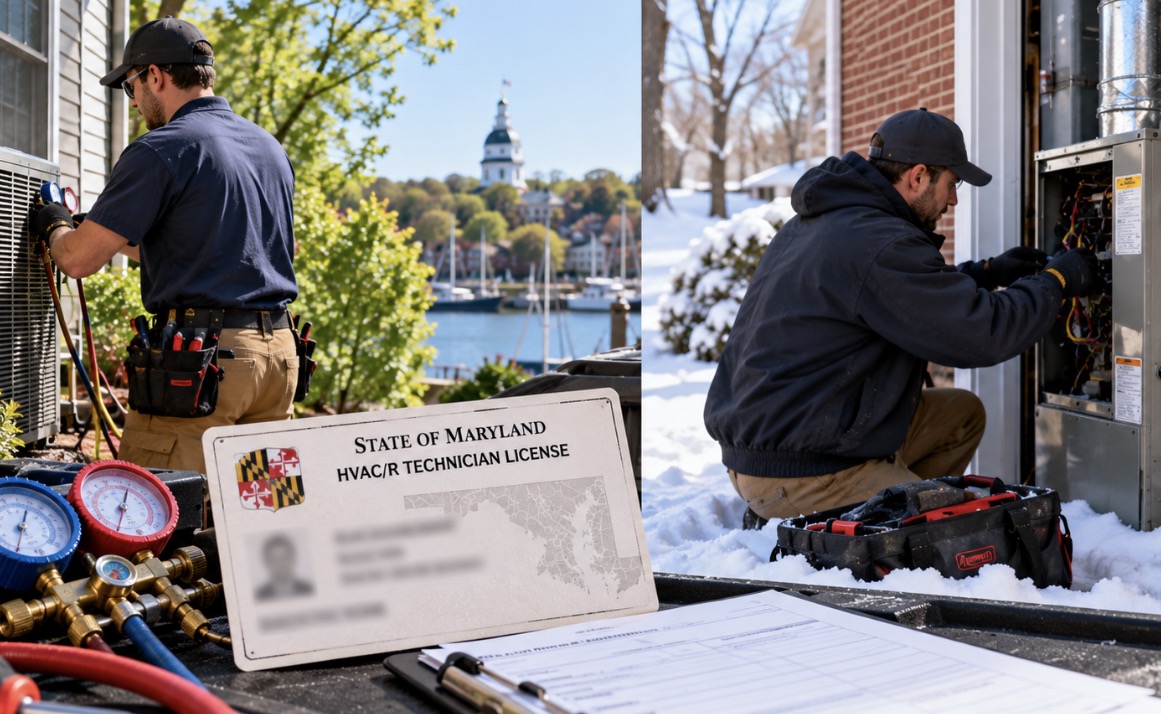
Here is the part almost no career guide mentions, and it matters more than the size of any single paycheck. In Maryland, the hours you work are the currency that buys your license, so a season you spend idle is not just lost income. It is a delayed credential.
The Maryland Board of Heating, Ventilation, Air Conditioning and Refrigeration Contractors requires an apprentice license to enter the trade, with no prerequisites to obtain one. Moving up to journeyman requires four years as a licensed apprentice plus 6,000 hours of supervised HVACR work, then passing the exam at 70 percent.
Run that arithmetic against the calendar. Six thousand hours across four years averages 1,500 hours a year. A technician working year-round logs closer to 2,000 and clears the requirement with room to spare. One idle for three months each year lands right at 1,500, hitting the threshold with no margin at all.
That is the true cost of being a single-season technician in this state. Not only the quiet months, but a journeyman license that arrives at the edge of the timeline rather than comfortably inside it. Confirm current requirements with the Board directly before you plan your timeline.
What Skills Does Each HVAC Season Demand?
The table below maps the calendar against what each stretch of it demands of you. Read down the right column rather than the middle one, because that column is the list of competencies deciding which rows you can bill for once you are working in the field.
| Season | What fills the schedule | What it demands of you |
|---|---|---|
| Summer | Emergency cooling repair, compressor and capacitor failures | Refrigeration cycle, EPA 608, diagnostics under pressure |
| Fall | Furnace tune-ups, system replacements | Combustion basics, heating controls, installation skill |
| Winter | No-heat calls, furnace, heat pump and boiler failures | Gas heat, defrost cycles, electrical troubleshooting |
| Spring | Air conditioning tune-ups, duct and indoor air work | Airflow, duct work, indoor air quality |
A technician who covers one row has three quiet stretches a year to get through. One who covers all four moves through the calendar without the gaps that make this trade look seasonal to people watching it from the outside. Breadth is the whole argument.
Which HVAC Training Covers All Four Seasons?
Full-system training is what removes the seasonal gap, and it is worth asking any program directly whether their course covers heating and cooling or one side of it. The HVAC Universal Technician course runs ten weeks and teaches both halves rather than specializing early.
Look at what the ten weeks contain before you enroll anywhere. The curriculum moves from safety and electrical fundamentals through thermostats and heating, then line sets and brazing, cooling systems, heat pumps and the refrigeration cycle, then EPA 608 certification and diagnostics.
Here is the position worth taking into any admissions conversation, Su'Coy Community Learning Center's included: ask what happens after the certificate. A program that will not discuss apprentice licensing, supervised hours and what the credential does not cover is selling you ten weeks rather than a career path.
Frequently Asked Questions About Seasonal HVAC Work in Maryland
Which month is usually busiest for HVAC technicians in Maryland?
The first prolonged heat wave, often July, when aging air conditioners fail under sustained load and emergency calls spike together. The first hard freeze does the same for heating, usually in December or January. Which hits harder depends on the year's weather rather than on any fixed pattern.
Do HVAC companies lay technicians off in the slow stretches?
Established companies generally keep people on year-round by moving them to maintenance, installations and duct work through spring and fall. Staying employed usually depends on being certified across both heating and cooling, because a single-season technician is harder to keep busy when their equipment sits idle.
Can I train for this while working a full-time job?
Yes, which is why the course runs in two formats. Evening classes run 4:30 PM to 8:30 PM on Monday, Wednesday and Thursday, and morning classes run 10:00 AM to 2:00 PM on Monday, Tuesday and Wednesday. Check the current schedule, since start dates and session availability change through the year.
What do HVAC technicians earn?
The Bureau of Labor Statistics put the national median annual wage for HVACR mechanics and installers at $61,010 in May 2025. Entry-level pay sits below that figure, and apprentices earn while they log hours. Local pay varies with employer, overtime and whether you hold a journeyman license.
Is there enough demand to justify training now?
The Bureau of Labor Statistics projects 11 percent growth for this occupation from 2025 to 2035, much faster than average, with roughly 40,600 openings a year nationally. Most of those come from replacing technicians who retire or leave the trade rather than from new positions being created.
Why Choose Su'Coy Community Learning Center for HVAC Training in Temple Hills, MD?
Su'Coy Community Learning Center teaches the full system rather than one season of it, which is the thing that decides whether your year has gaps in it. The Universal Technician course covers heating, cooling, heat pumps and the refrigeration cycle, and separate courses cover boilers, duct cleaning and water heater installation.
Every student receives an EPA Section 608 certification and an HVAC apprenticeship license. EPA testing happens on site, so you are not chasing an exam appointment somewhere else after graduation. Students who complete the requirements receive the HVAC Technician Diploma from Su'Coy Community Learning Center, and job-placement assistance is offered, though employment itself is never guaranteed.
The limits get stated plainly as well. Completing the course does not issue a Maryland HVACR license, because that path runs through apprentice registration and supervised field hours with the state Board.
Before you enroll anywhere, ask which seasons the course prepares you to bill for and what the program does not cover. Call (301) 901-7732 or visit 4584 Beech Rd in Temple Hills. The answer to that one question tells you more about a program than any brochure will.