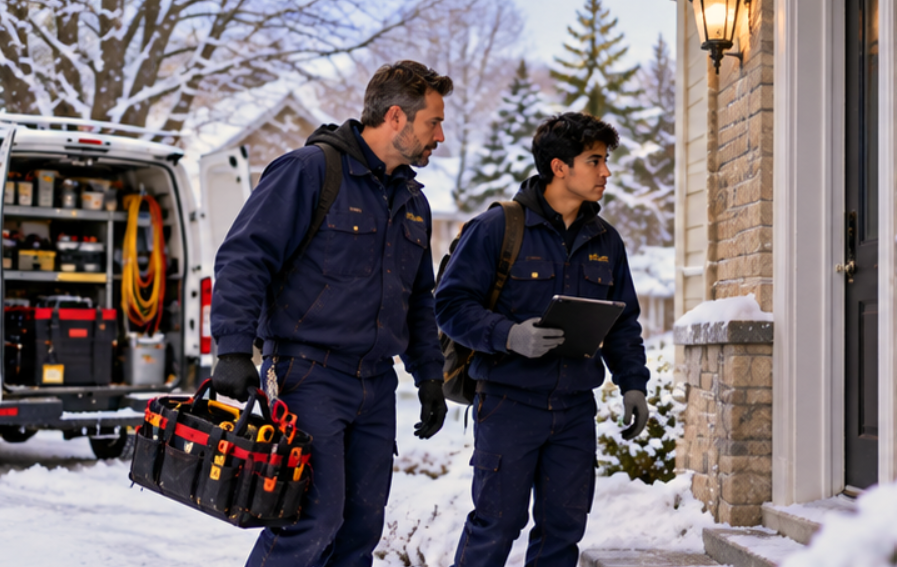
A winter furnace service call is a practical lesson in how HVAC systems work under actual operating conditions. In Maryland, cold weather can bring calls involving ignition failures, restricted airflow, thermostat problems, and blocked furnace vents. For an HVAC apprentice, the goal is to learn the diagnostic process, assist the lead technician, and understand how safety guides every decision.
An apprentice does more than carry tools or watch someone else work. They learn to gather information, recognize system behavior, follow diagnostic steps, document findings, and communicate professionally with customers. These skills develop through technical instruction, supervised field experience, and a clear understanding of which tasks they are qualified and authorized to perform.
What Tools Should an HVAC Apprentice Bring on a Winter Service Call?
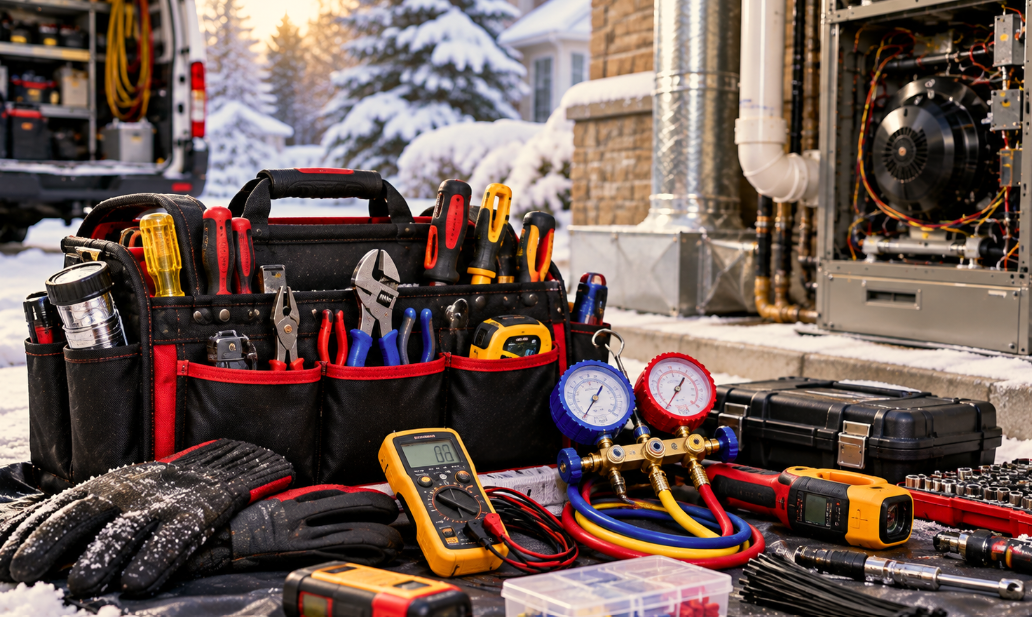
The right tools help apprentices stay organized and participate effectively in furnace diagnostics. Your employer or training instructor may provide specific equipment, so confirm what you need before purchasing expensive instruments. Focus first on learning safe tool handling, electrical fundamentals, and the purpose of each diagnostic instrument.
- Nut drivers and screwdrivers: Common sizes help with approved cabinet access and routine service tasks.
- Digital multimeter: Learn its functions and safe measurement procedures under qualified supervision.
- Headlamp or flashlight: Good lighting helps you observe components in dim basements and utility rooms.
- Safety equipment: Wear appropriate eye protection, gloves, footwear, and other PPE required for the task.
- Carbon monoxide awareness: Learn how CO monitors are used and follow your employer’s safety procedures.
A tool is only useful when you understand its limitations. Su’Coy Community Learning Center’s guide to essential HVAC tools can help you learn which tools technicians commonly use and how equipment needs change as you progress from classroom training to supervised fieldwork.
What Should an HVAC Apprentice Do First on a Furnace Call?
Start by listening to the homeowner and observing the system rather than immediately opening the furnace cabinet. Ask the lead technician how they gather information before diagnosing a problem. The initial conversation can reveal when the heat stopped, what symptoms appeared, and whether the issue affects the entire building.
Useful questions include whether the furnace makes unusual noises, whether the thermostat display is working, and whether the problem has happened before. Also note whether every room is cold or only certain areas. These details help the technician distinguish a heating-equipment problem from possible airflow, zoning, or distribution issues.
Professional conduct matters just as much as technical knowledge. Protect floors, keep tools organized, respect the homeowner’s space, and let the lead technician explain findings. As an apprentice, avoid guessing at a diagnosis or promising a repair before the technician has completed the necessary checks.
How Does a Technician Approach a No-Heat Furnace Call?
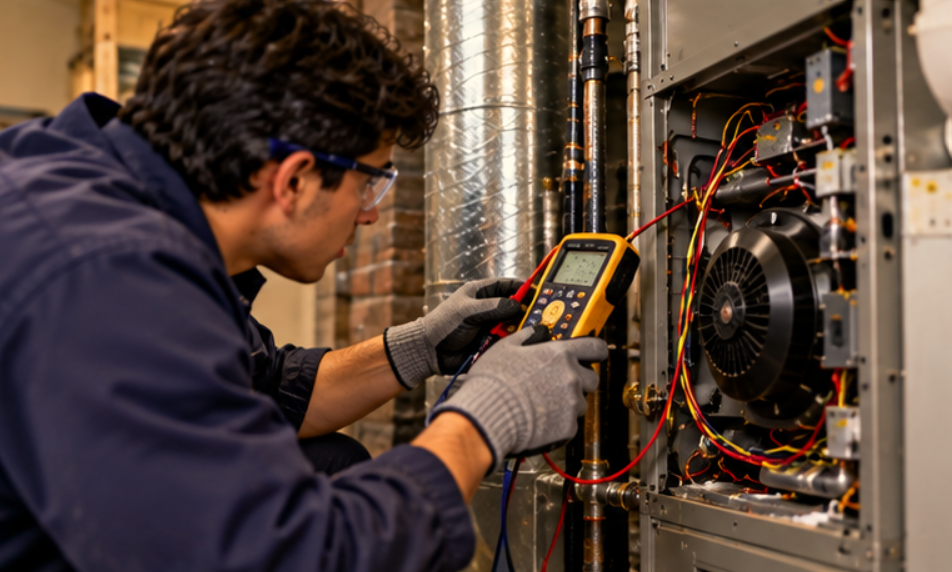
A structured diagnostic process helps technicians investigate simple causes before moving to more complex possibilities. The exact procedure depends on the furnace model, manufacturer instructions, and reported symptoms. Apprentices should observe the lead technician’s process, record relevant findings, and complete only the checks and tasks they are authorized to perform.
Check the Thermostat Settings First
The technician verifies the thermostat’s operating mode, temperature setting, display, and call for heat. A setting or control issue may explain why the furnace is not running. Apprentices can learn how thermostat commands relate to the heating system without assuming that a thermostat problem is the cause of every no-heat call.
Check the Furnace Power and Controls
Gas furnaces require electricity to operate controls and components such as the inducer motor and blower. The technician checks the applicable power supply, service switch, breaker, and control indications using the manufacturer’s procedure. Apprentices should not remove energized panels or perform electrical measurements without appropriate training, authorization, and supervision.
Inspect the Furnace Air Filter
A heavily restricted filter can reduce airflow and contribute to overheating or high-limit shutdowns. The technician checks the filter’s condition and verifies whether airflow restrictions may be affecting operation. A dirty filter is a possible cause, not a complete diagnosis; duct restrictions, blower problems, and other issues may also require investigation.
Watch the Furnace’s Operating Cycle
Once preliminary checks are complete, the technician observes the furnace’s response to a call for heat. The sounds, control indications, and order in which components operate provide useful diagnostic clues. Apprentices should record where the cycle stops and ask the technician how those observations help narrow down the possible causes.
How Does a Gas Furnace Ignition Sequence Work?
Understanding the ignition sequence helps HVAC apprentices connect classroom theory with real equipment. On many conventional induced-draft gas furnaces, a call for heat starts the inducer motor, and the control verifies required conditions before allowing ignition. The exact sequence varies by manufacturer, model, and ignition-control design.
A typical sequence may include the following stages.
- Call for heat: The thermostat signals that heating is needed.
- Inducer operation: The inducer motor starts to establish the required venting conditions.
- Safety verification: The control checks the required pressure-switch and other safety inputs.
- Ignition: The ignitor or spark system activates according to the furnace design.
- Burner operation: The gas valve opens when the required conditions are satisfied.
- Flame verification: The control confirms that burner flame has been established.
- Blower operation: The circulating blower starts according to the control’s timing and operating requirements.
The sequence helps a technician identify where further investigation is needed, but a stopped cycle does not prove that one particular component has failed. For example, an inducer operating without ignition may involve venting, condensate drainage, pressure-switch conditions, wiring, or controls. The lead technician must verify the cause using the manufacturer’s diagnostic procedure.
| Observed symptom | Possible areas for investigation |
|---|---|
| Furnace does not respond | Thermostat call, electrical supply, controls |
| Inducer runs but ignition does not proceed | Venting, pressure-switch conditions, condensate drainage |
| Ignition occurs but flame is not established | Ignition components, gas supply, control sequence |
| Burners light but shut off quickly | Flame-proving circuit, burner conditions, control inputs |
| Furnace shuts down during operation | Airflow, temperature limits, venting, or other safety conditions |
A flame sensor is one example of a component apprentices may encounter during training. Many systems use flame rectification to verify burner flame, but the correct signal range and test procedure depend on the equipment manufacturer’s specifications. Learn how the technician interprets the wiring diagram and approved test procedure instead of relying on a universal reading or assuming the sensor is always at fault.
Which Furnace Problems Show Up Most in a Maryland Winter?
Cold weather can expose weaknesses that may not appear during milder conditions. Apprentices should learn to recognize environmental clues and understand why a technician checks the complete system rather than replacing a component based on one symptom.
- Blocked vent terminations: Snow, ice, or debris may obstruct the intake or exhaust openings of applicable high-efficiency furnaces.
- Condensate drainage problems: A blocked drain or trap can interfere with operation on condensing furnace models.
- Ignition component failures: An ignitor or related component may fail and prevent the normal startup sequence.
- Flame-proving faults: A furnace may shut down if its controls cannot verify a stable flame.
- Restricted airflow: A loaded filter, duct restriction, or blower problem may contribute to overheating and safety shutdowns.
Outdoor conditions provide useful context, but apprentices should not assume that snow or ice is the cause simply because a furnace stops working during winter. Any vent inspection, condensate check, or diagnostic task must follow the manufacturer’s procedures and the employer’s safety requirements.
Which Furnace Tasks Require Extra Training and Supervision?
Gas furnaces combine fuel, electricity, hot surfaces, exhaust gases, and safety controls. Apprentices must understand the limits of their training and follow applicable Maryland licensing requirements. Do not adjust gas valves, alter wiring, bypass safety controls, or perform combustion testing independently unless properly trained, authorized, and legally permitted to do so.
Never bypass a pressure switch, rollout switch, or limit control to make a furnace run. These devices protect against potentially dangerous operating conditions. A tripped safety control requires investigation into the underlying cause, not repeated resetting or an improvised workaround.
Carbon monoxide is another essential safety concern. The CDC reports that more than 400 Americans die each year from unintentional, non-fire-related carbon monoxide poisoning. If a CO alarm sounds or a hazardous condition is suspected, follow emergency procedures and leave the investigation to appropriately qualified responders and technicians.
How Can You Become a More Effective HVAC Apprentice?
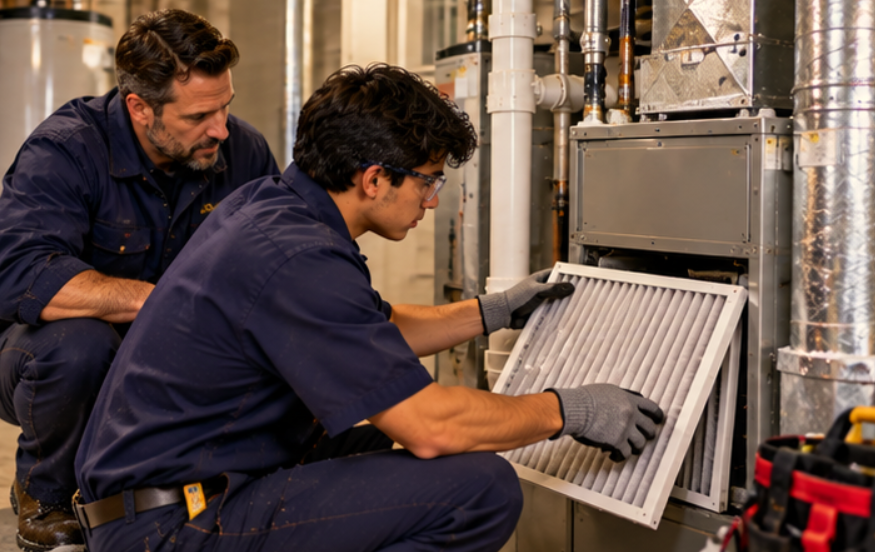
Strong apprentices build dependable habits rather than trying to appear experienced before they are ready. Arrive prepared, keep tools organized, record the symptoms and findings from each call, and review the reasoning behind the diagnosis. Over time, these habits help you recognize patterns and understand how different furnace components work together.
Ask focused questions when the technician has time to explain. Instead of asking only which part failed, ask what evidence supported the diagnosis and which alternatives were ruled out. This approach connects classroom concepts with field observations and helps you develop troubleshooting skills that transfer to different equipment models.
Technical education also matters. Classroom instruction builds the foundation in electrical theory, heating systems, safety, and refrigeration, while supervised experience shows how those principles apply on actual service calls. If you’re building your HVAC knowledge before entering the field, explore Su’Coy Community Learning Center’s HVAC Universal Technician training program and its week-by-week course curriculum.
Frequently Asked Questions About HVAC Apprentice Furnace Calls
How long does it take before an HVAC apprentice can work on gas furnace components?
It depends on the task, your demonstrated skills, employer policies, and applicable licensing requirements. Apprentices should begin with supervised learning and only perform work they are trained, authorized, and legally permitted to complete. Gas-system and combustion-related tasks require particular care.
What should I do if I make a mistake during a furnace service call?
Tell your supervising technician immediately and explain exactly what happened. Do not hide a mistake or attempt an unauthorized fix. Prompt reporting gives the technician a chance to assess any damage, restore safe operation, and explain how to avoid the same problem on future calls.
Is it normal to feel unsure during your first HVAC service calls?
Yes. New apprentices are still learning equipment, tools, safety procedures, and diagnostic reasoning. Focus on observing the process, taking accurate notes, following instructions, and asking relevant questions at appropriate times. Confidence develops through consistent practice, technical study, and supervised experience.
What should I tell a homeowner if they ask me what is wrong with their furnace?
Be honest about your role and let the lead technician explain the diagnosis. You can say that the system is being checked and the technician will discuss the findings. Avoid guessing at the cause, quoting a repair, or promising a result before the assessment is complete.
What safety precautions should an HVAC apprentice take during a winter furnace call?
Wear appropriate protective equipment, follow the lead technician’s instructions, and verify that power or gas is handled safely before working on equipment. Never bypass safety switches or perform unfamiliar tasks without supervision. If you suspect a gas leak or carbon monoxide hazard, alert the supervising technician immediately and follow established safety procedures.
How Can Su’Coy Community Learning Center Help You Prepare for HVAC Work?
Su’Coy Community Learning Center in Temple Hills, Maryland, offers training for people interested in entering the HVAC trade. The HVAC Universal Technician course covers heating and cooling fundamentals, electrical concepts, safety, brazing, refrigeration, and diagnostics. For aspiring HVAC technicians, this training can provide a foundation for developing practical skills before pursuing supervised field experience.
Every student in the program receives an EPA Section 608 certification and an HVAC apprenticeship license, with EPA testing on site. Before enrolling, ask which credentials the course provides, what practical training is included, and how the school supports graduates seeking entry-level employment or apprenticeship opportunities.
For information about the HVAC Universal Technician course, contact Su’Coy Community Learning Center at (301) 901-7732. Ask about upcoming classes, practical training, licensing considerations, and available job-placement assistance.