Skip to content


You can land HVAC jobs without a license in the DMV, but hands-on field work starts with an apprentice license. Maryland and DC both offer one to beginners. In Virginia, new hires usually start as helpers on a licensed crew. Supply houses and dispatch desks hire without one.
Why HVAC Jobs Ask for a License
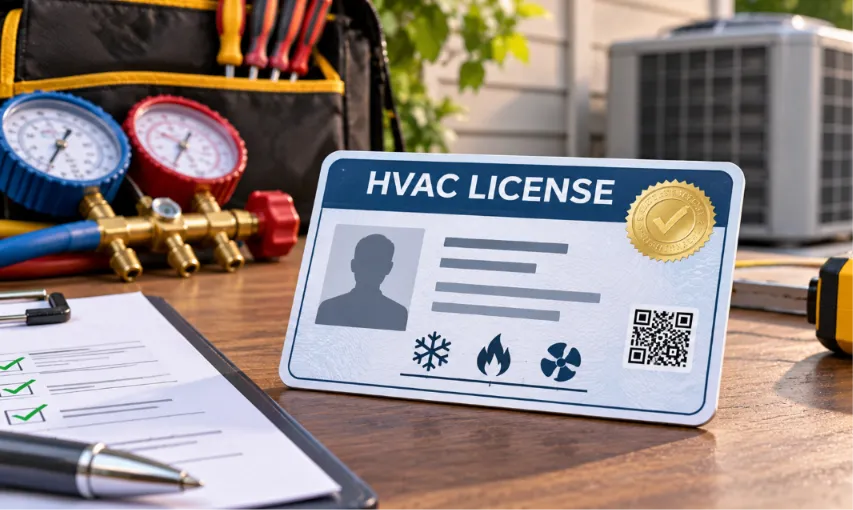
HVAC work involves gas lines, high voltage and refrigerant under pressure. That is why every DMV jurisdiction licenses the people who do it. Employers need each person on the truck to be legal for the work they touch, even on day one.
The first license is easier to get than most beginners expect. Maryland's HVACR board says anyone entering the trade needs an apprentice license, and it has no prerequisites. So when a job post says "licensed," it often means "able to work legally on our crew."
What Can a Maryland Apprentice Do?
A licensed master or journeyman must be on the jobsite to supervise you. Maryland's licensing notice also says apprentices may not do any HVACR work alone. They cannot sign contracts for HVACR work, either.
Inside those limits, an apprentice does hands-on work. You carry equipment, run line sets and help with brazing, which joins copper pipe with heat. You also change filters, help start up new systems and watch a technician track down faults.
Each hour counts toward a Maryland journeyman license. It takes four years as a licensed apprentice and 6,000 hours of training. If your supervisor leaves for another call, you stop work on that system. A company that sends you out alone puts your future license at risk.
Five HVAC Jobs Open Before Licensing
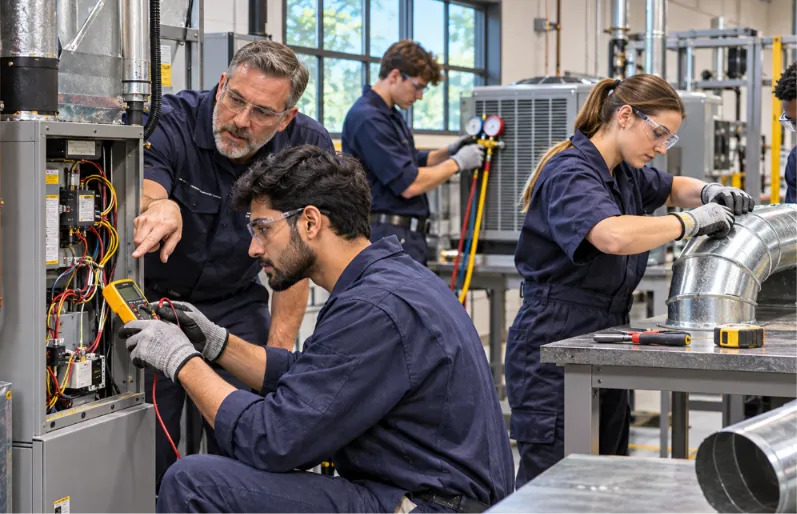
Five entry roles hire people without a journeyman license. They are the usual starting points for a first HVAC job in Maryland or the District. Pick the one that fits what you want most, whether that is field hours, a steady schedule or a foot in the door.
Installation Helper
Install crews hire apprentices to help replace furnaces, air handlers and outdoor units. The work is physical, so expect heavy lifting, hot attics and tight crawl spaces. In return, you see every part of a system as it goes in, and you learn ductwork early.
Service Apprentice
A service apprentice rides with a technician on repair and upkeep calls. You learn how to find faults, talk with customers and plan a working day. Strong apprentices also take on more of each call as their supervisor's trust grows.
Building Maintenance Helper
Apartment complexes, hospitals and office buildings keep teams that care for HVAC and other systems. A helper role offers steady hours and indoor work. Ask in the interview whether a licensed supervisor oversees the HVAC tasks, because that decides whether your hours count.
Supply House Counter Staff
HVAC distributors hire counter and warehouse staff to sell parts to contractors. These are HVAC jobs without a license, because you never work on systems. You do learn part numbers, brands and the local contractors who buy them. Those contacts help with your next job search.
Dispatcher or Customer Service
HVAC companies need people to book calls, answer customers and route technicians. It is office work, but you learn how a service business runs. Some companies move office staff onto a truck when an apprentice spot opens, so ask about it.
Field roles build licensed hours fastest. However, counter and office roles build knowledge and contacts. Either way, pick an employer who keeps a written record of your hours, since every future license depends on it.
Is EPA 608 Enough to Work Alone?
No. Many new technicians pass the EPA Section 608 exam and think it works like a license. It covers safe refrigerant handling only. It does not replace the state or District license you need for HVACR work.
The card still opens doors. Under EPA's sales restriction, sellers may only sell refrigerant to certified technicians or to companies that employ them. A certified hire lets a small shop buy what it needs. The credential also never expires, so it stays with you from job to job.
EPA exempts registered apprentices for up to two years while a certified technician closely and continually supervises them. Registered means signed up with the U.S. Department of Labor's Office of Apprenticeship. At Su'Coy CLC, our course prepares you for the Section 608 exam, and you test on site.
Entry HVAC Jobs Compared Across the DMV
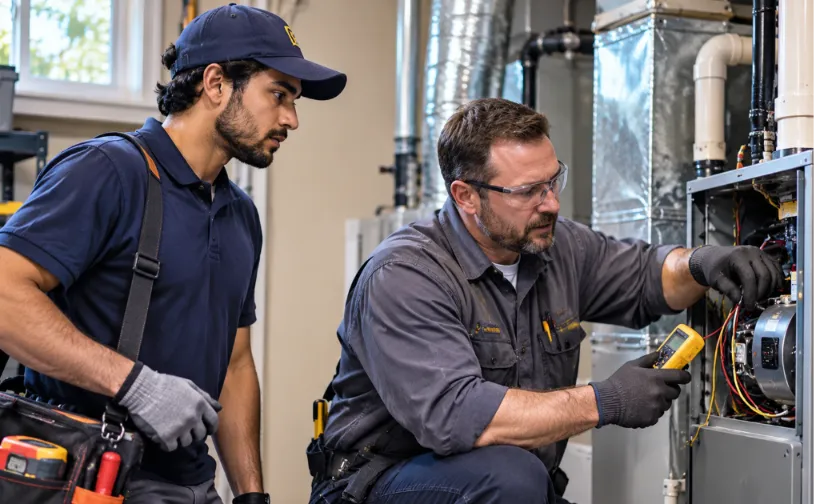
Hiring rules vary by employer, so ask how your hours will be recorded before you accept an offer. This table shows what each first job usually needs and whether its hours lead to a technician license.
| First job | Before you start | Builds licensed hours? |
|---|---|---|
| Installation helper | Apprentice license in Maryland or DC | Yes, under a licensed supervisor |
| Service apprentice | Apprentice license, EPA 608 helps | Yes, under a licensed supervisor |
| Building maintenance helper | Varies by employer | Sometimes, when HVAC work is supervised |
| Supply house counter | No HVACR license | No |
| Dispatcher or customer service | No HVACR license | No |
The field jobs at the top of the table are where licenses come from. The bottom rows can still be smart moves for a few months if money is tight. Aim to switch to a field role early.
DC and Virginia Rules for Beginners
The rules shift once you cross a border. DC's licensing agency issues refrigeration apprentice licenses with no experience needed. You only need proof of a job or of school enrollment. After three years of experience, you can sit for the DC journeyman exam.
However, Virginia's Board for Contractors does not list an apprentice license. Since April 2025, it has offered a residential HVAC license for work in homes. It takes two years of experience plus 160 hours of training. A journeyman license takes four years plus 240 hours, or another approved mix.
So ask Virginia employers how they record helper hours toward those licenses. If you work in more than one place, keep separate records for each. Every board reviews its own hours.
Which First Job Should You Take?
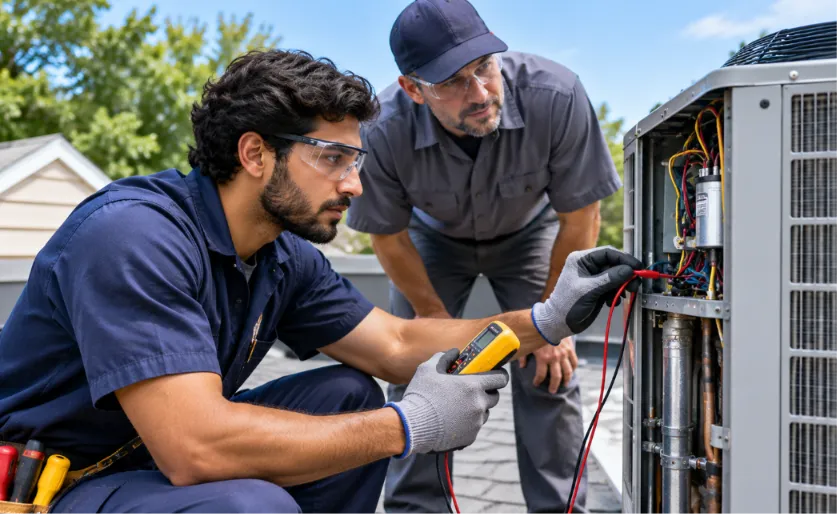
The best first job depends on your goals, your money and where you live. A Prince George's County resident can reach Maryland and DC employers easily. Northern Virginia shops may suit someone farther west. Weigh the commute as seriously as the hourly pay.
Use these rules of thumb to sort the offers in front of you.
- For the fastest path to journeyman, take an installation or service apprentice role.
- For a steady schedule, look at building maintenance teams.
- To learn the industry first, start at a supply house counter.
- If you need a paycheck right away, take an office role and plan your move to the field.
There is room for new workers. The Bureau of Labor Statistics expects about 40,600 openings a year for HVACR mechanics and installers nationwide. It also expects jobs to grow 11% between 2025 and 2035.
Get Ready for Your First HVAC Job
Training before you start makes those early weeks easier. Our Universal HVAC Technician course runs 10 weeks, with morning and evening classes. You practice wiring, brazing, refrigerant work and fault finding on training equipment.
Students who want a second skill can also add our six-day duct cleaning class. After training, we offer job-placement help, though we cannot promise a job.
Su'Coy Community Learning Center has taught HVAC in Temple Hills since 2020. We give HVAC students across Maryland and the DMV a hands-on start. Our trainers are licensed. Business lessons cover bidding, pricing, insurance and taxes for anyone who wants a company of their own later.
To ask about the next start date, reach our admissions team.
Frequently Asked Questions
How do I get a Maryland HVAC apprentice license?
Apply online through the Maryland Board of HVACR Contractors before you help on any HVACR job. Working without it is costly. The board can fine unlicensed work up to $5,000 per violation, and a first offense can also bring up to six months in jail. Keep the license current.
Where can I find entry-level HVAC jobs in Maryland?
Registered apprenticeships are one paid route. The state's Office of Apprenticeship describes them as paid jobs that mix hands-on work, classroom lessons and mentoring. Apprentices finish without student debt. Ask each program sponsor which employer you would work for.
How do I find HVAC apprentice jobs in DC?
DC's licensing agency points new workers to several training sources. They include the city's Department of Employment Services apprenticeship office and Associated Builders and Contractors. Steamfitters Local 602 and Plumbers and Steamfitters Local 486 are also on its list. Each one shares information on trade training and apprenticeships.
How do HVAC helper jobs in Virginia count toward a license?
Virginia counts practical experience in the trade. People who watched your work confirm it on an Individual Experience Verification Form. You must be at least 18 to apply for the residential license. With six or more years of experience, that license needs no formal training hours at all.
Can a registered apprenticeship replace Maryland's journeyman exam?
Yes. A registered program needs 8,000 hours of on-the-job training, about four years, plus 576 hours of related classes. Graduates qualify for the journeyman license without sitting the state exam. Your apprentice license must stay current the entire program, and you must file within two years.